SPY -1.29%
BND -0.63%
QQQ -2.34%
DIA -0.74%
VNQ -0.81%
GLD -2.46%
BTC -7.89%
AAPL +0.66%
GOOGL +0.98%
NVDA -7.75%
MSFT -0.36%
META +0.42%
AMZN -0.10%
TSLA -0.79%
UBER -2.09%
GS -2.08%
BAC -0.24%
JPM +0.05%
BRK.A +0.19%
COST +1.20%
XOM +2.06%
BABA -7.35%
WMT +1.23%
SPCX -1.06%
DIS -0.92%
F -2.86%
  • Discounts and special offers
  • Subscriber-only articles and interviews
  • Breaking news and trending topics

Already a subscriber?

By signing up, you accept Moneywise's Terms of Use, Subscription Agreement, and Privacy Policy.

Not interested ?

Top Stories
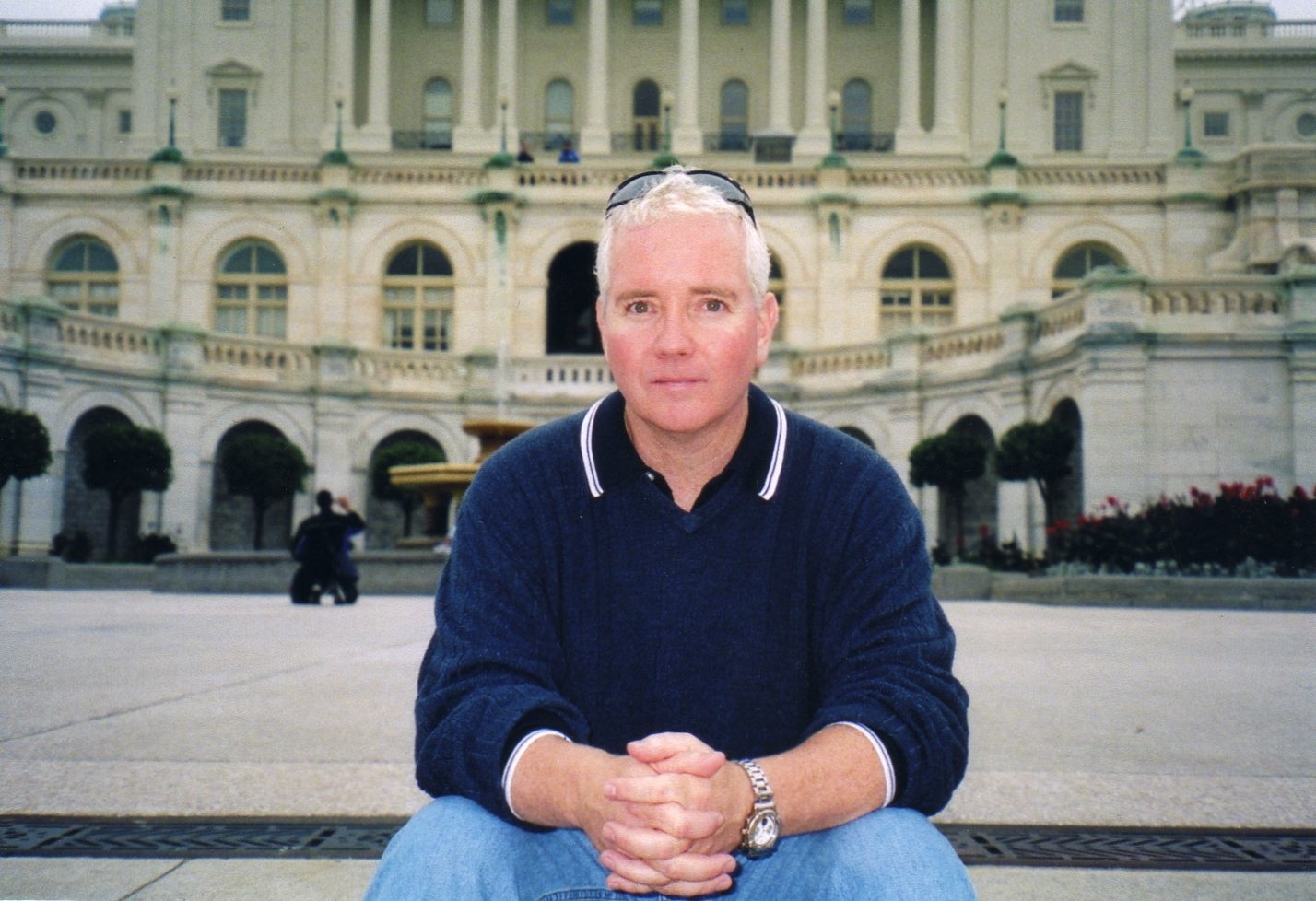
Peter Brown CBS LA/CBS News

‘I've run out of money’: 87-year-old California wildfire survivor says contractor went $90K over budget and wants another $51K to finish his home

A disabled Los Angeles County senior says he’s out of a house and money due to a dispute with a contractor following last year’s devastating California wildfires.

Peter Brown, 87, told CBS News that he lost his Altadena home to the 2025 Eaton Fire — one of the two devastating blazes that displaced an estimated 205,000 people in Altadena and Pacific Palisades.

Advertisement

He said he paid Menu Homes, a modular home building company, $538,000 to build a new wheelchair-accessible home within a year — eventually forking over $90,000 in added costs on top of that, only to have the contractor allegedly demand another $51,000 to finish the job.

The money news that actually matters.

By signing up, you accept Moneywise Terms of Use, Subscription Agreement, and Privacy Policy.

“I’ve run out of money. He’s drained me. I just don’t have the $51,000,” Brown told the outlet. “He’s just taking everything. And that was going to be my savings.”

With the deadline for completion passed and the home unfinished, Brown added that he’s out of insurance money too. And on top of that, CBS noted, he owes $2,500 a month in rent while awaiting his home. A GoFundMe was set up for Brown, an Army veteran, saying he “needs our help with basic living expenses and the remaining costs of getting back into his home.”

Meanwhile, a representative for Menu Homes claims that the delays are the fault of the county — an accusation some Altadena town council members dispute.

The hidden costs of rebuilding after a disaster

Bobby Shokri of Menu Homes pinned the delays on L.A. County requirements and months of permitting approval holdups, along with additions like a garage and porch. He added that “we had a contract for a certain scope of work — the county imposed additional scope of work.”

Menu Homes didn’t reply to Moneywise’s request for comment and the dispute is ongoing.

But Morgan Whirledge, a member of the Altadena Town Council, told Moneywise that while the county’s permitting process in the wake of such a “huge wave of projects” hasn’t been perfect, it streamlined “a notoriously bureaucratic and difficult process” and waived all permit fees.

“Many of the delays are due to contractors or professionals who may be taking a long time responding to comments from the county,” he added. “Either way, it’s not an excuse for the excessive amount of charges Menu Homes is allegedly adding to their contracted price.”

He added that the alleged charges “should not fall on a homeowner with limited resources who already is under contract at a certain price” and that the Contractors State License Board guidance for disaster rebuilds, “states that contracts must be fixed price.”


Advertisement

Fellow council member Darlene Green told CBS News that, in a case like Brown’s, “If something changes, it shouldn’t be a shock. And it certainly shouldn’t be hundreds of thousands of dollars over the initial asking.”

And while that might be true, homeowners do often face a costly fallout after a natural disaster. Homeowners across the U.S. spent “$23 billion annually in 2021 to 2023 repairing damages from disasters,” at an average cost of $22,100 per homeowner in 2023, according to Harvard University’s Joint Center for Housing Studies.

For Floridians in the wake of Hurricane Helene in 2024, the financial stress “snowballed over time,” the non-profit Urban Institute reported. They added that “survivors sometimes faced deepening debt or worse credit” and that fixed incomes “made recovery costs harder to absorb,” recounting how one family “cashed out a 401(k) account to stay afloat.”

And while homeowners insurance does generally cover disasters like wildfires and hurricanes, Allstate warns that “coverage may vary by geographic location and by policy.” That means that you might not be covered, for example, if you live in an area that is prone to particular disasters.

Other disasters, like earthquakes and floods, require extra coverage altogether.

Advertisement

Must Read

How to avoid a financial disaster

Before disaster strikes, it’s important to know what your homeowners insurance does and doesn’t cover — and seek out any additional coverage you might need.

But for those who, like Brown, fall victim to a disaster, the Consumer Financial Protection Bureau recommends reaching out to mortgage lenders or landlords, utility providers and insurance and credit card companies to inquire about pausing or refinancing payments and waiving penalties or late charges, while paying close attention to your credit score.

Scammers, of course, may also come out of the woodwork. The Federal Trade Commission says to steer clear of contractors who ask you to pay upfront or “insist you pay by wire transfer, gift card, payment app, cryptocurrency or in cash.” If they want you to sign a blank contract and don’t have a license, that’s also a red flag.

It’s best practice, they add, to look up reviews for any potential contractor and even check with your local homebuilder’s association, insist on seeing their license and insurance coverage, pay any down payments by credit card or cheque, keep all invoices and receipts and never hand over a final payment until you’re satisfied with the finished job.

A disaster that robs you of your home and possessions is heartbreaking enough. But knowing how to navigate the aftermath to help avoid additional financial burdens can save you lots of headaches — and cash — as you work toward rebuilding your life.

You May Also Like

Share this:
Mike Crisolago Sr. Staff Reporter

Mike Crisolago is a Sr. Staff Reporter at Moneywise with nearly 20 years of experience working as a journalist, editor, content strategist and podcast host. He specializes in personal finance writing related to the 50-plus demographic and retirement, as well as politics and lifestyle content.

more from Mike Crisolago

Explore the latest

Disclaimer

The content provided on Moneywise is information to help users become financially literate. It is neither investment, tax nor legal advice, is not intended to be relied upon as a forecast, research or investment advice, and is not a recommendation, offer or solicitation to buy or sell any securities, enter into any loan, mortgage or insurance agreements or to adopt any investment strategy. Tax, investment and all other decisions should be made, as appropriate, only with guidance from a qualified professional. We make no representation or warranty of any kind, either express or implied, with respect to the data provided, the timeliness thereof, the results to be obtained by the use thereof or any other matter. Advertisers are not responsible for the content of this site, including any editorials or reviews that may appear on this site. For complete and current information on any advertiser product, please visit their website.

†Terms and Conditions apply.