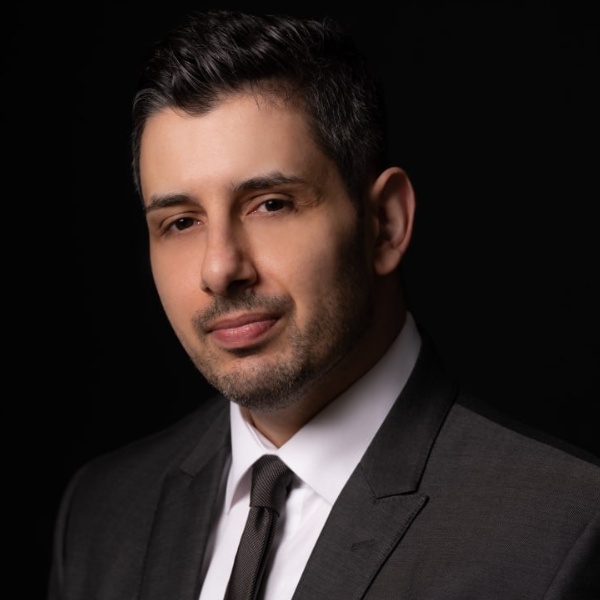
Anthropic CEO Dario Amodei has opened up about his personal experience with cancer — and he says it has given him an added sense of urgency about artificial intelligence’s potential to transform medicine.
In a September 2026 essay, “We Must Pace the Frontier,” Amodei wrote that he has worked on AI for 12 years because he believes it could “dramatically raise the quality of human life.” Among his most ambitious predictions: AI could cure most major diseases in the next five to 10 years.
That would put the potential timeline roughly between 2031 and 2036.
Thanks for subscribing!
The money news that actually matters.
By signing up, you accept Moneywise Terms of Use, Subscription Agreement, and Privacy Policy.
“I feel the urgency personally,” Amodei wrote, explaining that his father died from a disease that was cured only a few years after his death. He also revealed that he survived early-stage cancer that, had he developed it 50 years earlier, would not have been treatable. “Carefully wielded, AI can be the latest in a long line of technological miracles that have uplifted and ennobled humanity.”
Can AI find the cures we need?
Amodei has previously outlined his optimistic vision for AI in medicine. In a 2024 essay, he predicted that powerful AI could accelerate biological research enough to compress 50 to 100 years of progress into five to 10 years.
“It’s my guess that powerful AI could at least 10x the rate of [medical] discoveries, giving us the next 50 [to] 100 years of biological progress in [five to] 10 years,” he wrote.
He specifically pointed to the possibility of eliminating most cancers, developing more effective treatments for genetic diseases and dramatically improving the prevention and treatment of infectious diseases.
The Anthropic chief argued that AI could help researchers make scientific discoveries at a vastly faster pace by analyzing enormous amounts of biological data, identifying promising drug candidates and helping scientists design experiments.
“The average cancer drug increases survival by a few months while having significant side effects that need to be carefully measured (there’s a similar story for Alzheimer’s drugs),” he wrote. “This leads to huge studies (in order to achieve statistical power) and difficult tradeoffs which regulatory agencies generally aren’t great at making, again because of bureaucracy and the complexity of competing interests. When something works really well, it goes much faster: There’s an accelerated approval track and the ease of approval is much greater when effect sizes are larger.”
He has also pointed to advances in technologies, such as gene editing and cell therapies, as evidence that medicine is already moving toward increasingly targeted treatments.
Must Read
- Jeff Bezos backs a platform that lets anyone invest in rental homes for as little as $100 — 6 ways to build wealth like a landlord without actually being one
- The tax breaks in Trump's 'big beautiful bill' expire after 2028. Here are 4 moves to make before the window closes
What’s the catch?
Amodei’s prediction comes with a major caveat, however: He acknowledges that it is simply speculative.
His 2024 essay noted that biology has unavoidable limitations, including the time required for experiments, clinical trials and human biological processes — and it “requires a lot of things to go right the first time, including animal experiments and things like designing microscopes or expensive lab facilities.”
Even highly capable AI cannot necessarily eliminate the time required to test whether a treatment is safe and effective in people.
“I’m actually open to the (perhaps absurd-sounding) idea that we could get 1,000 years of progress in [five to] 10 years, but very skeptical that we can get 100 years in [one] year,” he explained.
His latest essay also highlights the other side of his AI outlook. While Amodei believes the technology could dramatically improve human health, he is simultaneously calling for AI companies to slow down the pace of development so safety research can keep up.
“We must slow the pace at which we improve the capabilities of AI models,” he wrote. “Progress will still seem fast, and we must make wise use of the time we gain.”
He said the conversation surrounding pumping the breaks has been floated since 2023, but he believes that it “made little sense back then” when the AI models were not yet “powerful enough to act as agents in the world in any coherent way.”
“Today, however, the picture is totally different,” he wrote. “The current models are an almost endless gold mine of insight into both how to build AI well and what can sometimes go wrong with it if it isn’t built well. I believe that if slowing down bought us even an extra year or two before models reach critical levels of capability, and we used that time to advance alignment, we could greatly reduce the risk that something goes seriously wrong.”
He called for “a coordinated pacing strategy” that be believes would ultimately give frontier AI developers the “time to do this vital work without sacrificing commercial advantage or the United States’ lead in AI.”
Amodei is hardly alone in calling for caution as AI becomes increasingly powerful.
AI pioneers including Yoshua Bengio and Geoffrey Hinton, as well as AI researcher Stuart Russell and Apple co-founder Steve Wozniak, have warned that the technology could advance faster than humans can safely manage. In 2023, more than 33,000 people signed an open letter calling for a six-month pause on training AI systems more powerful than GPT-4.
More recently, the debate has moved inside the AI industry itself, with 1,386 researchers and engineers at frontier labs including OpenAI, Anthropic and Google DeepMind backing calls for greater coordination and a potential slowdown if AI development begins moving too quickly.
“We have found a way to turn energy into compute, and compute into intelligence,” wrote Jasjeet Sekhon, Chief Strategy Officer of Google DeepMind. “The benefits will be enormous, from curing diseases to understanding the cosmos. We can capture the benefits of the coming intelligence explosion while managing its risks, but only if we build the tools to pace the frontier of the riskiest capabilities before we need them, so we protect people and keep the social trust that innovation depends on.”
For Amodei, the stakes are unusually personal. The same technology he believes could help prevent future generations from experiencing diseases that have majorly impacted families, including his own, is also a technology he — and other insiders — believes must be developed carefully.
Whether AI can actually deliver on his 2036 prediction, however, remains to be seen.
Anthropic did not immediately respond to Moneywise’s request for comment.
You May Also Like
- Dave Ramsey warns nearly 50% of Americans are making 1 big Social Security mistake — here’s what it is and 3 simple steps to fix it ASAP
- A single line on your car insurance policy could be inflating your premium by up to 30% — here's what to change
AnnaMarie Houlis is a journalist and author with more than 15 years of experience, thousands of bylines and four books covering everything from travel, lifestyle and wellness to finance, technology and business.