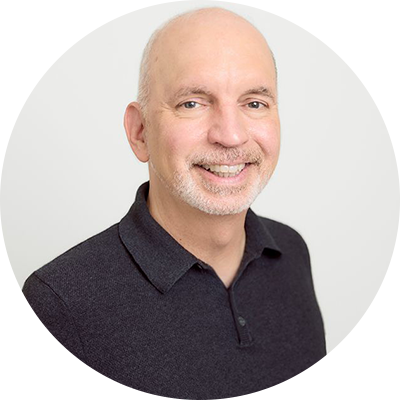
Although he’s certainly not alone in this, 27-year-old Bryson from Lake Charles, Louisiana, made the most quintessential American financial mistake: buying a car he couldn’t afford.
During an episode of personal finance expert Caleb Hammer’s podcast, Financial Audit, Bryson — an operations manager making $48,000 annually — confessed that the interest rate on his auto loan was a whopping 12.75%.
To break this down further: he’s spending $1,275 a month for his RAM 2500 diesel truck, while only earning around $3,333 per month. “Who the f*ck drives a RAM?” Hammer asked. “A third of your income goes to this truck.”
Making the situation even worse is the fact that Bryson’s wife is on maternity leave. The couple share a one-month-old daughter, and his wife — who chose not to participate in the episode — is currently only making 60% of her $44,000 salary as a leasing agent.
Unfortunately, overspending on vehicles is one of the key reasons why many Americans are living paycheck to paycheck.
The true wealth killer
According to CNBC and SurveyMonkey’s financial security survey, a whopping 65% of American adults admitted that they were living paycheck to paycheck as of 2024.
One of reasons: oversized car payments. “The car you drive can destroy your chance of building true wealth,” financial expert Ramit Sethi said during an episode of his podcast, I Will Teach You To Be Rich. “Car payments are one of the true wealth killers of today that nobody wants to talk about.”
As of the first quarter of 2024, the average monthly car payment is $735, according to Edmunds.
Like Bryson, 4.2% of all auto loan borrowers were paying more than $1,000 a month in payments, revealed data from Experian. That ratio has jumped significantly from 2020 when it was just 1.1%.
If this sounds unsustainable, that’s because it probably is for most people.
During the second quarter of 2024, one in four new vehicle sales with a trade-in had negative equity, according to Edmunds. That means a significant number of drivers on the road are upside down on their auto loans.
Borrowers like Bryson, who are clearly overburdened by their auto loan, often have reasons to justify the purchase. “I do a lot of driving,” he told Hammer, while overlooking the fact that the issue isn’t how much he’s driving, but how much he’s paying.
“In the United States of America, cars are a status symbol,” finance guru Dave Ramsey once said during an episode of The Ramsey Show. However, stretching your budget to keep a car you can’t afford is a clear sign of financial mismanagement, he added.
Must Read
- Dave Ramsey warns nearly 50% of Americans are making 1 big Social Security mistake — here’s what it is and the simple steps to fix it ASAP
- Robert Kiyosaki begs investors not to miss this ‘explosion’ — says this 1 asset will surge 400% in a year
- Vanguard reveals what could be coming for U.S. stocks, and it’s raising alarm bells for retirees. Here’s why and how to protect yourself
Join 250,000+ readers and get Moneywise’s best stories and exclusive interviews first — clear insights curated and delivered weekly. Subscribe now.
Avoiding the auto trap
Driving is a necessity for many Americans and some need to travel more than others due to the nature of their work. However, even frequent drivers can avoid the auto loan trap by simply selecting cheaper vehicles.
A RAM 2500 diesel truck currently costs between $45,250 and $61,605, according to Edmunds. By comparison, a brand new Ford Maverick 2025 edition could cost around $27,990, according to Car and Driver. To tighten your wallet even further, a used truck would presumably cost even less.
Drivers like Bryson can significantly lower their monthly car payments by switching to cheaper (or used) vehicles without compromising on how much they travel.
In fact, Ramsey believes most drivers should attempt to eliminate the car payment altogether. He often encourages his viewers to avoid auto loans and pay for vehicles in cash.
“A lot of you spend a lot of money to impress people you will never meet with your car,” he said on an episode of The Ramsey Show.
“What most people mean when they say [I can afford it] is they think they can meet the payments if they can keep their job. Well, let me help you with a new definition of ‘I can afford it’: ‘I wrote a check and paid for it.’”
You May Also Like
- Turning 50 with $0 saved for retirement? Most people don’t realize they’re actually just entering their prime earning decade. Here are 6 ways to catch up fast
- This 20-year-old lotto winner refused $1M in cash and chose $1,000/week for life. Now she’s getting slammed for it. Which option would you pick?
- Warren Buffett used these 8 repeatable money rules to turn $9,800 into a $150B fortune. Start using them today to get rich (and stay rich)
- Here are 5 easy ways to own multiple properties like Bezos and Beyoncé. You can start with $10 (and no, you don’t have to manage a single thing)
Vishesh Raisinghani is a financial journalist covering personal finance, investing and the global economy. He's also the founder of Sharpe Ascension Inc., a content marketing agency focused on investment firms. His work has appeared in Moneywise, Yahoo Finance!, Motley Fool, Seeking Alpha, Mergers & Acquisitions Magazine and Piggybank.