Many young adults are turning to the Bank of Mom and Dad while they struggle to keep up with rising costs. And many parents are obliging.
But what if your dad happened to be one of the richest men in the world? And, after a one-time monetary gift, he refused to give you any more money?
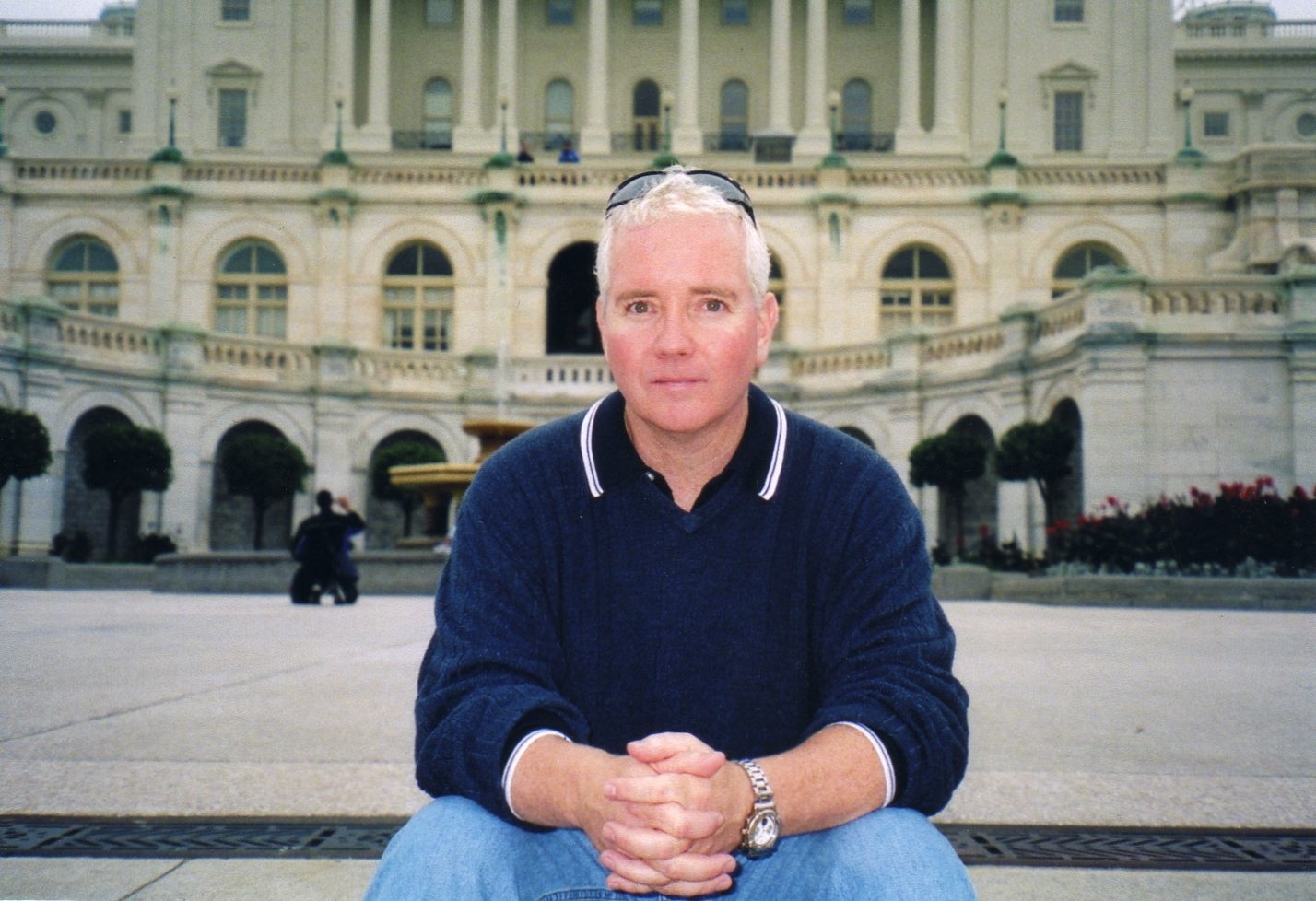
That was the case for Peter Buffett — son of investor Warren Buffet, who is the world’s tenth-richest man with a net worth of $154.8 billion, according to Forbes.
Thanks for subscribing!
Take control — get our free newsletter.
By signing up, you accept Moneywise Terms of Use, Subscription Agreement, and Privacy Policy.
Peter inherited $90,000 in Berkshire Hathaway stock when he was 19 years old and in college. He told NPR in an interview about his new memoir, “Life is What You Make it,” that the money was “a head start.”
While that stock would be worth more than $70 million today, he used it to buy recording equipment — but he has no regrets. He’s now an Emmy Award-winning musician.
But he went through some tough times to get there, including taking out double mortgages on his house. And, back in his 20s, he approached his dad and asked for a loan. The Bank of Dad turned him down.
“I learned more in those [difficult] times about myself and my resiliency than I ever would have if I’d had a pile of money and I could have glided through life,” he told NPR.
Yet, more parents are increasingly saying ‘yes.’ And they don’t have anywhere near the resources of the world’s 10th richest man. Yet, that could be putting their retirement at risk.
More parents are supporting their adult children
Adult children asking their parents for financial support isn’t new. But even older adult children — those classified as millennials and Gen X — are relying on the Bank of Mom and Dad. And a surprising number are still living with their parents, even after moving out on their own for a period of time.
A whopping 42% of adults say they rely on their parents for financial support, including 72% of Gen Zers, according to Northwestern Mutual’s 2026 Planning & Progress Study. But more than half of Millennials and a third of Gen Xers still do, too.
And, as the study points out, one in five respondents believe they’ll never achieve financial independence. And it’s not just young adults who feel this way. More than half of respondents (56%) across generations believe achieving financial independence is harder today than it was for previous generations.
But that support adds up — in 2024, parents provided $26.6 billion in financial support to 3.7 million adult children in the U.S., according to the U.S. Census Bureau’s 2025 Survey of Income and Program Participation (SIPP).
And that number only accounts for adult children living on their own. Yet, in 2024, 58.3% of men and 56.4% of women aged 18 to 34 still lived with their parents.
Some may say this is coddling. Others may say it’s harder for young people to make it, thanks to the rising cost of living, a tough job market and stubborn inflation.
Indeed, a Pew survey found that more Americans believe it’s harder for young adults to achieve financial milestones, such as paying for college, finding a job, buying a home and saving for retirement — even covering basic expenses.
Must Read
- Jeff Bezos backs a platform that lets anyone invest in rental homes for as little as $100 — 6 ways to build wealth like a landlord without actually being one
- The tax breaks in Trump's 'big beautiful bill' expire after 2028. Here are 4 moves to make before the window closes
Supporting your children while protecting your savings
Parents supporting their adult children can put their own retirement at risk.
A LendingTree study found that 65% of parents who’ve provided financial support to their adult children over the past two years have felt financially stressed because of it. That support has made it harder for them to pay off debt (16%) and save for retirement (11%). It’s even made it harder for them to cover everyday expenses (18%).
Many parents want to help, but should they? There are ways to support your adult children without putting your own retirement at risk, and without coddling them.
Even if your heart is in the right place, it’s important to protect your long-term financial security by only giving or lending what you can afford and setting boundaries, like setting a cap on the loan or a timeline for repayment, to encourage good money habits.
You don’t want to end up pulling money from your retirement savings or pausing contributions to your 401(k). Nor do you want to go into debt yourself to help your adult children pay off their debts. By creating a household budget, you can see how much you’ll left over after you cover your own expenses.
If you do lend money or provide financial support — such as covering a portion of their rent — set boundaries around that support. Otherwise, you could end up paying indefinitely. For example, you can offer to cover the rent for six months while they’re looking for a new job, at which point the financial support will end.
If you’re loaning them money, consider making it official. Have them sign a contract and ensure they understand the repayment terms and schedule. Maybe you won’t charge them interest, but you can make the loan repayable over a certain period of time (say, 12 equal payments monthly over the course of a year).
Or, instead of giving them cash to help with a major purchase, such as a car, you can offer to match their savings instead — say, matching 50% of a car down payment.
You could offer help that doesn’t require writing a check. For example, you might be able to help out with childcare.
Sometimes, though, you might have to say no, especially if you’re dipping into your retirement savings or taking on debt to support one or more adult children. And this isn’t necessarily a bad thing.
One study published in Work and Occupations found that, in many households, young adults who receive financial support from their parents lowers their self-efficacy.
For Peter Buffett, parental support didn’t come in the form of a check. As he told NPR, that support “came in the form of love and nurturing and respect for us finding our way, falling down, figuring out how to get up ourselves.”
You May Also Like
- Dave Ramsey warns nearly 50% of Americans are making 1 big Social Security mistake — here’s what it is and 3 simple steps to fix it ASAP
- A single line on your car insurance policy could be inflating your premium by up to 30% — here's what to change
Vawn Himmelsbach is a veteran journalist who covers tech, business, finance and travel. Her work has been featured in publications such as The Globe and Mail, Toronto Star, National Post, CBC News, Yahoo Finance, MSN, CAA Magazine, Travelweek, Explore Magazine and Consumer Reports.