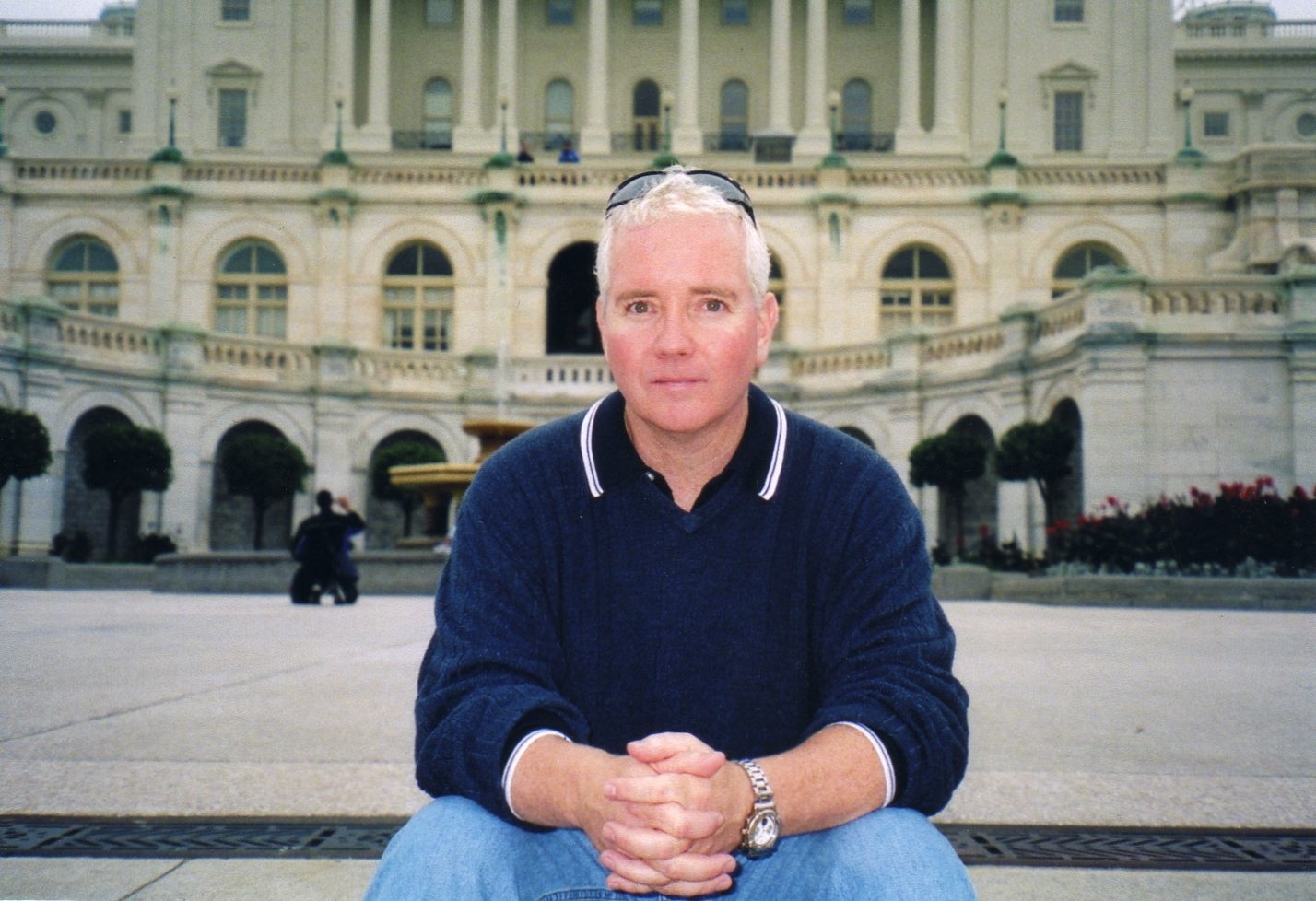
Vaneza Ramos has won two jury trials and was awarded nearly $12 million in total after her late husband’s life insurance provider declined to pay out his $350,000 policy after he died of Covid-19 in 2020.
But according to reporting in the Nebraska Examiner, Ramos, who is a mother of 10 and gave birth to the couple’s last baby just days before her husband Jose Gaytan’s death, says she has not been paid anything by Farmers New World Life Insurance.
This week, Ramos’ legal team reached out to the Nebraska Department of Insurance for help. Her lawyer, Ross Pesek of Pesek Law, asked for an investigation into what he called “bad faith” practices from Farmers. A probe could uncover whether other Nebraskans have experienced similar denials from the company.
Thanks for subscribing!
The insurance clarity you've been missing.
By signing up, you accept Moneywise Terms of Use, Subscription Agreement, and Privacy Policy.
Meanwhile, Farmers filed a motion in Douglas County District Court in October asking for either a new trial or a reduction of the penalties awarded. The company argues that the damages described during the trial should be less than $200,000, not the millions they were ordered to pay.
Neither the Nebraska Department of Insurance nor Farmers responded to the Examiner’s requests for comment.
Anatomy of an insurance mess
The couple had a life insurance policy for Gaytan with a $350,000 death benefit, and had paid $17,360 into it before he passed away at 55, according to an earlier story in The Nebraska Examiner.
Ramos filed the claim, but Farmers rejected it, noting that Gaytan had a history of heart disease. The insurer claimed the family didn’t disclose it in the policy application.
Gaytan did suffer a heart attack a few months before signing the life insurance policy. Still, Ramos’ legal team argued that the insurance agent who approached Gaytan was aware of his heart condition and that it was disclosed, including his prescription medication, on the policy application. Farmers also ran a medical history test included in the application, and the company knew the results.
When Farmers rejected the $350,000 policy payment request and only offered to cover the $17,360 paid into the account, Ramos opted not to cash the check and subsequently sued the insurer in March 2022, in Douglas County, Nebraska, district court.
In two separate cases, and after an initial district court ruling in Farmers’ favor, a successful appeal saw jury verdicts backing Ramos and supporting her original claim for the $350,000 Farmers owed in early 2026. Later, on Oct. 16, a jury in a second case awarded her $11.3 million in damages on top of that payout, based on breach of contract.
According to the Examiner, while they have been waiting to be paid out, Ramos’s eldest child, who is 18, has paused his plans in to help out with their family business. Their truck was repossessed, and they’ve had to go into debt.
Must Read
- Jeff Bezos backs a platform that lets anyone invest in rental homes for as little as $100 — 6 ways to build wealth like a landlord without actually being one
- The tax breaks in Trump's 'big beautiful bill' expire after 2028. Here are 4 moves to make before the window closes
Clearing the air on health issues and life insurance policies
Insurance customers may wonder where the burden of proof lies in alleged misrepresentation in life insurance policies.
“When an insurance company in Nebraska claims misrepresentation, the onus is on the insurer,” Roger Diefendorf, an attorney at Forum & Lex, P.C. in San Francisco and a former California Administrative Law Judge, told Moneywise. “A false statement made on an application will not render a policy invalid if it did not deceive the insurer to its detriment. The court has interpreted this to mean that the insurer must show the person knew they were deceiving the company.’
According to Diefendorf, a jury can infer intent from a false answer, but it doesn’t have to, as happened in Ramos, when the jury rejected Farmers’ misrepresentation defense.
“Most people don’t know this, but the misrepresentation doesn’t have to relate to how the person died, as long as the insurer would not have issued the policy had it known the truth,” Diefendorf noted. “In this case, his heart attack would be relevant even though he passed away from Covid-19.”
After years of reviewing medical files as a judge, Diefendorf said one issue he noticed in the Ramos case was that during his paramedical exam, Gaytan told the examiner that he was taking lisinopril for high cholesterol.
“Lisinopril is used for high blood pressure, heart failure, and after a heart attack; it is not used to lower cholesterol,” he stated, “I would think that would prompt an insurance company to inquire why someone is on this medication prior to issuing a policy, not after someone has passed away.”
Responsibilities of insurance agents
From an insurance company’s point of view, potential breach-of-contract and bad-faith issues can go off the rails when an agent engages with a customer about a policy and avoids getting key information.
“When an agent sits at someone’s kitchen table and fills out that application, the family is trusting that what gets said in that room is what reaches the underwriter,” Weston Shirey, a licensed life insurance broker and benefits coordinator at North American Senior Benefits in Nashville, Tennessee, told Moneywise. “If the agent knew about a health condition and didn’t write it down, that is not the family’s failure. Carriers recruit, train and appoint their agents, and they should own their agents’ errors.”
What protects a consumer is being transparent with insurance agents.
“Answer every health question completely and honestly, keep a copy of the signed application, read the policy when it arrives during the free-look period, and never let an agent talk you out of disclosing something because ‘it probably doesn’t matter,” Shirey said.
Avoid these life insurance documentation mistakes
Too often, life insurance policyholders make unforced errors that can come back to haunt them and their families.
Examples of those mistakes include buying a policy and never telling your spouse where it is, letting premiums lapse, and assuming an agent handled the health questions.
To keep things on an even keel, Shirey advises five action steps to protect policyholders and their families.
- Disclose everything on the application, even if it raises the price. “A slightly bigger premium beats a denied claim,” Shirey said.
- Keep a copy of the application and the policy where your beneficiary can actually find them;
- Tell your beneficiaries the carrier’s name and that the policy exists.
- If a claim is denied or slow-walked, demand the denial and the exact reason in writing and ask for the claim file.
- Complain to your state insurance department and talk to an attorney before you sign anything or accept a refund of premiums as a settlement. “That refund can be worth a fraction of the benefit, as this case shows,” Shirey said.
Updated with files from Moneywise editor G.M. Buck.
You May Also Like
- Dave Ramsey warns nearly 50% of Americans are making 1 big Social Security mistake — here’s what it is and 3 simple steps to fix it ASAP
- A single line on your car insurance policy could be inflating your premium by up to 30% — here's what to change
Brian O'Connell is a US based former Wall Street bond trader and author of two best-selling books: "The 401k Millionaire" and "CNBC's Creating Wealth". His work is featured on national finance and business platforms like TheStreet.com, CBS News, CNN, The Wall Street Journal and Forbes