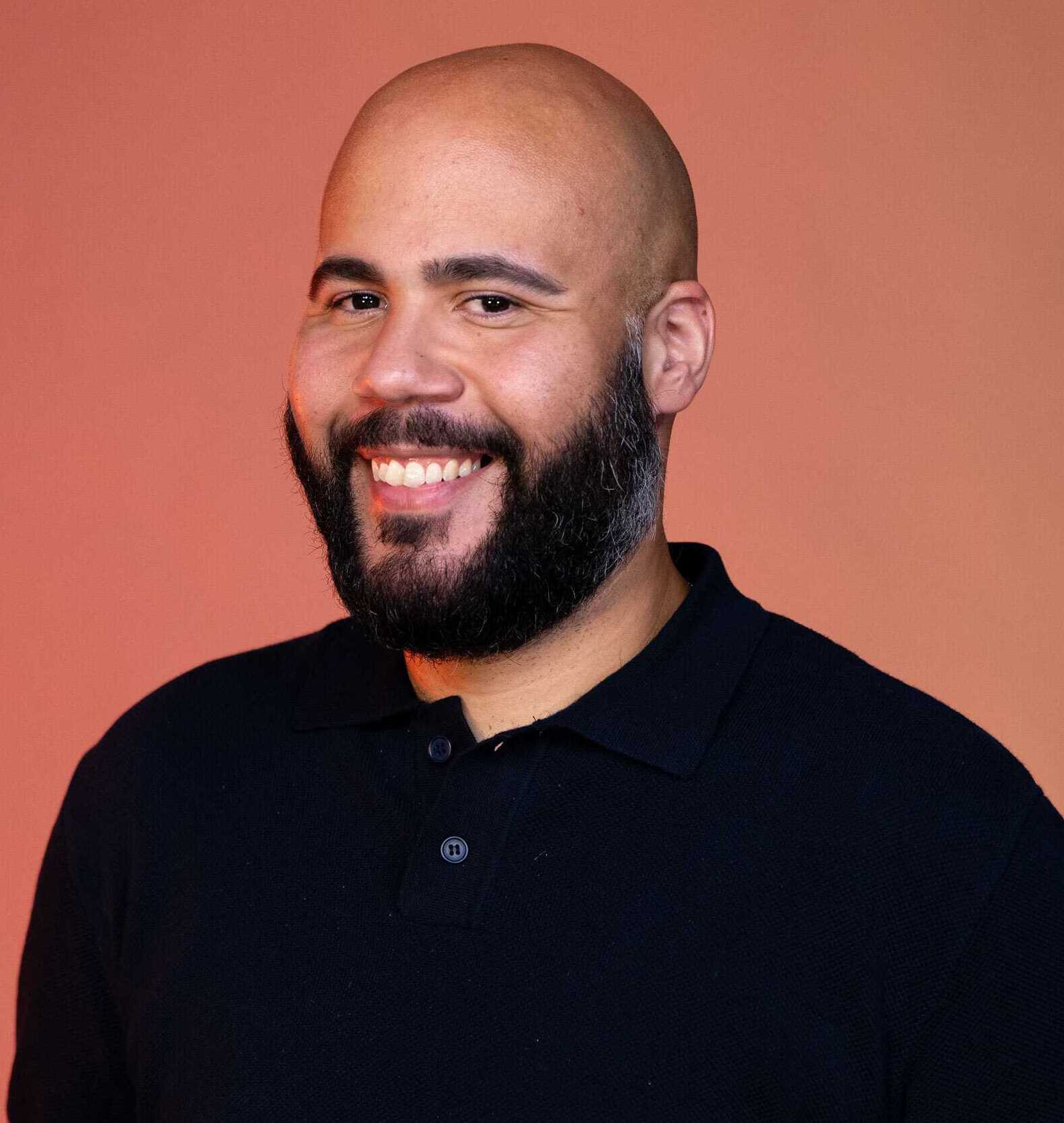
Billionaire Mark Cuban is putting stock in every worker being able to build wealth through the same opportunities as shareholders.
His belief got some support last week when SpaceX’s blockbuster initial public offering (IPO) turned thousands of current and former employees into millionaires, including welder Juan Hernandez, who joined the company in 2015, earning $28 an hour.
When SpaceX shares began trading on the Nasdaq on June 12 and closed at $160.95 on their first day, Hernandez — who now works at Blue Origin — held roughly 6,500 shares worth more than $1 million.
“I didn’t know it was gonna be this big, at this point,” he told CBS News.
Cuban’s argument is that you shouldn’t have to bet on a rare moonshot to get that kind of payoff. It’s also an example of why compensation through equity should be available to workers throughout a company, and not just executives. Cuban’s
“A strong argument could and should be made that every employer should be required to offer all employees stock in the same manner the CEO receives annual stock awards or options, warrants, etc.,” Cuban wrote on X on June 13. “Whatever percentage of salary/earnings the CEO gets in shares, so should every employee.”
More than 4,400 current and former SpaceX employees are expected to become millionaires from the IPO, including welders, machinists and technicians who held equity through years of uncertainty, according to a New York Times analysis.
The proof Cuban already has
Cuban has seen this play out at least three times before.
When Yahoo acquired Broadcast.com — the streaming and internet broadcasting company he co-founded with Todd Wagner — for $5.7 billion in 1999, 300 of the company’s 330 employees became millionaires. Even at MicroSolutions, his first company, he paid out 20% of the $6 million sale price to his 80 employees. When he sold his majority stake in the Dallas Mavericks in 2023, staff received more than $35 million.
“In every business I’ve sold, I’ve paid out bonuses to every employee that was there more than a year,” Cuban wrote on X in 2024.
Cuban’s belief is that the equity should scale with pay. If a CEO receives stock awards worth 50% of their $10 million salary, every employee in that company should receive stock worth 50% of their own compensation. A front-desk worker making $40,000 would get $20,000 in equity, rather than the same dollar amount as the CEO.
“Multiple studies show that when everyone owns stocks, the results are better. Which matches my experiences with multiple companies,” Cuban told Fortune in October 2025.
Must Read
- You can now build wealth like a landlord for as little as $100 — and no, you don't have to chase down rent or take 3 A.M tenant calls
- Goldman Sachs used to hoard prime real estate deals for the ultrarich. Two ex-analysts just opened the door for $250
- Robert Kiyosaki begs investors not to miss this ‘explosion’ — says this 1 asset will surge 400% in a year
Join 250,000+ readers and get Moneywise’s best stories and exclusive interviews first — clear insights curated and delivered weekly. Subscribe now.
The CEO pay divide
Cuban’s point is about fairness.
The 2025 Executive Paywatch report from the American Federation of Labor and Congress of Industrial Organizations (AFL-CIO) found that the median U.S. worker earned $49,500 in 2024, while the average S&P 500 CEO took home $18.9 million — 285 times the median pay of workers at their own companies.
The Economic Policy Institute (EPI) says that ratio was just 21 to 1 in 1965. A major reason for the increase is that executive pay has shifted heavily toward stock awards, which rise in value when markets climb.
Workers paid mostly in wages don’t get that same upside, even though many of them are helping fund those gains through their 401(k)s.
The practical objections
Stock awards only work if the company does well, if employees can actually sell their shares and if they remain employed long enough for the awards to vest. An employee at a private regional company may receive equity that has little or no practical value because there’s no market for shares.
There’s also the risk of wage compression. If proportional equity became mandatory, some employers could hold down base pay to offset the cost, replacing guaranteed wages with a potentially risky ownership stake.
Those concerns help explain why broad employee ownership has remained voluntary.
Still, the research on voluntary programs is compelling. The National Center for Employee Ownership (NCEO) estimates that, as of 2026, roughly 15.1 million American workers participate in 6,609 employee stock ownership plans (ESOPs), with more than $2.1 trillion in assets.
A 2023 NCEO study found that workers at S corporation ESOPs had a median retirement balance of $80,500, more than double the $30,000 median balance for workers at similar non-ESOP companies.
The problem is that most workers never get access to these programs in the first place.
Read More: Dave Ramsey says this 7-step plan ‘works every single time’ to kill debt, get rich in America — and that ‘anyone’ can do it
What this means for your money
Cuban’s proposal would require congressional action before any structural changes could happen. But the underlying logic applies today.
If your employer offers an employee stock purchase plan (ESPP) or equity grants and you haven’t participated, you may be leaving money on the table. If you already have stock options or restricted stock units (RSUs), understanding the vesting schedule and tax implications is just as important as receiving the grant itself. Exercising options at the wrong time can create a tax bill on gains that exist only on paper.
If your company doesn’t offer equity, the closest equivalent is a 401(k) match. You receive an immediate return on every dollar you contribute up to the employer’s matching limit, before the market has a chance to move.
Hernandez spent a decade helping build SpaceX’s launch infrastructure and walked away a millionaire.
Most workers doing the same job at companies that never offered equity don’t get that opportunity.
You May Also Like
- Dave Ramsey warns nearly 50% of Americans are making 1 big Social Security mistake — here’s what it is and the simple steps to fix it ASAP
- Thanks to Jeff Bezos, you can now become a landlord for as little as $100 — and no, you don't have to deal with tenants or fix freezers. Here's how
- Millionaires under 43 are reshaping investing — just 25% of their portfolios are in stocks. Here’s where their money is going
- Robert Kiyosaki issues grim warning for baby boomers. Many could be ‘wiped out’ and homeless ‘all over’ the country. How to protect yourself now
Godwin Oluponmile is a content specialist, SEO strategist and copywriter with seven years of expertise in finance, Web 3.0, B2B SaaS and technology. His work has been featured in publications such as Entrepreneur, HackerNoon, Blocktelegraph and Benzinga.