Do you feel like you’re falling behind financially? You’re not alone.
A survey by Navigator found that 53% of U.S. adults feel financially behind where they expected to be, and 28% say they are falling “far behind”. If you’re experiencing this kind of financial anxiety, it’s completely normal.
To get a more accurate perspective, it helps to compare yourself with peers in your age group. Younger workers haven’t had as much time to develop the skills or experience needed for higher pay, while older workers often have more time to climb the corporate ladder.
With that in mind, here’s the latest data from the Bureau of Labor Statistics (BLS) on median earnings by age groups.

AmeriSave
Find low rates to access your home equity
Vanguard Digital Advisor
Automate your portfolio with a low-cost robo-advisor
Mogul
Build your real estate portfolio with ease starting from $250
Priority Gold
Diversify your retirement fund with a precious metals IRA 20s
Your 20s are the early stages of your career, so it’s no surprise that most workers in this age group earn less than their older counterparts.
According to BLS data from the third quarter of 2025, the median salary for workers aged 21–24 is $41,392, while for those aged 25 to 34, the median is $59,800.
In other words, if you earn more than $60,000 a year and were born in the 2000s, you are earning more than half of your peers.
But here’s the key: the biggest financial advantage in your 20s isn’t how much you earn — time is.
Starting to invest early lets you tap into the power of compounding, where your money grows on itself over time.
The easiest way to make that work in your favor is to automate it from day one, so your money starts growing before you're tempted to spend it.
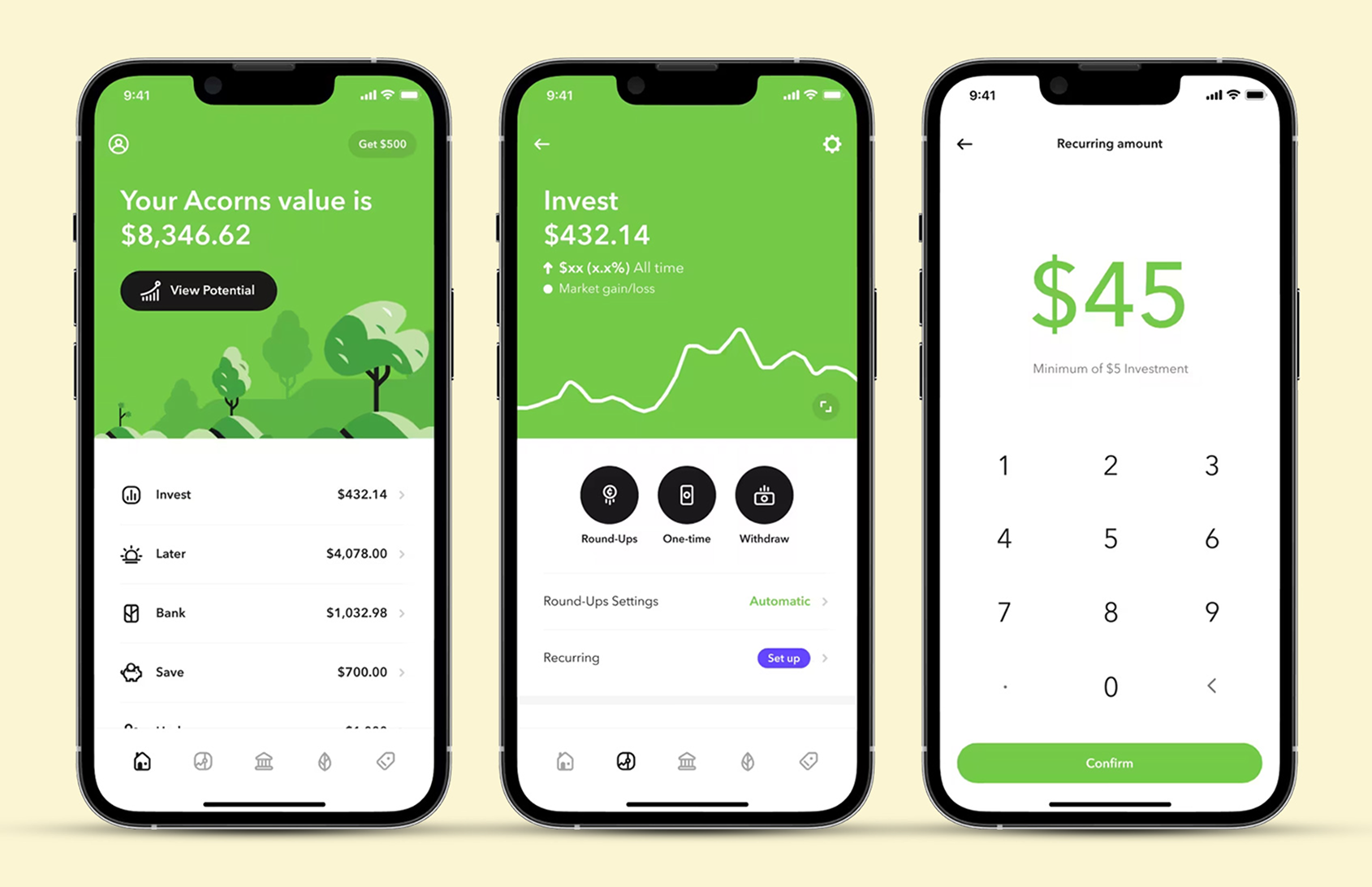
Micro-investing apps such as Acorns let you contribute to your retirement accounts based on what your budget allows.
The app rounds up your everyday purchases to the nearest dollar and invests the spare change automatically, so you're building a portfolio without needing a lump sum to get started.
Acorns
Auto-invest your spare change Acorns also matches you with one of five automated portfolios based on your goals and risk tolerance.
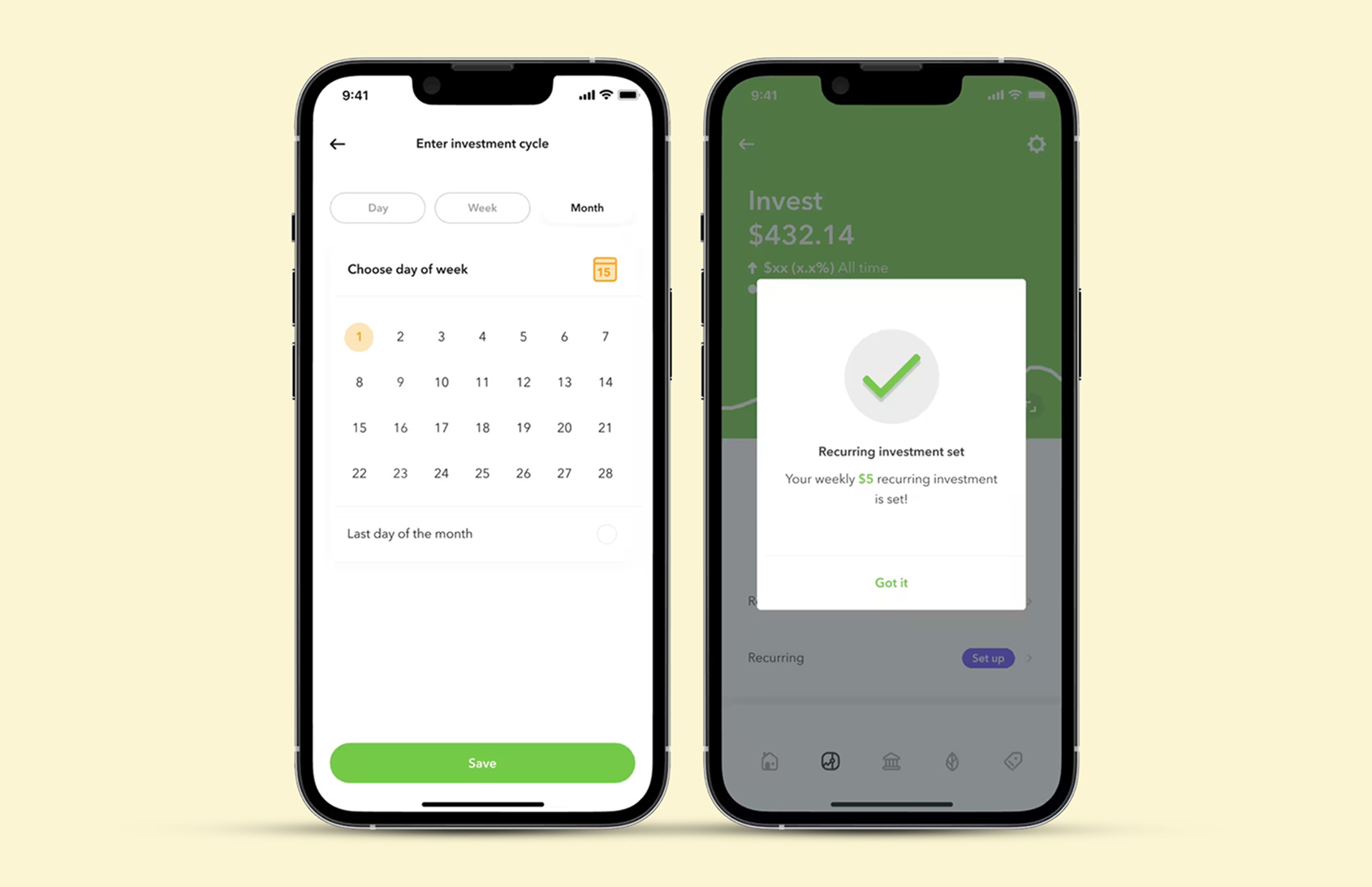
You can layer on recurring contributions in just a few minutes, so consistency happens by default instead of by willpower — exactly the kind of habit that pays off most when you start it in your 20s.
Plus, as a Moneywise reader, you get $20 when you set up a recurring deposit.
Another low-cost robo advisor option is Vanguard's Digital Advisor, which puts the investing expertise of one of the world's largest asset managers right at your fingertips.
It takes the guesswork out of investing by building a personalized portfolio for you using Vanguard's well-known low-cost ETFs and mutual funds — then keeps things running smoothly with automatic rebalancing.
The platform also offers guidance on saving for retirement and lets you set additional goals as your life evolves.
It can even help you think through debt repayment strategies, potentially freeing up more cash to invest toward your long-term plans.
With a minimum investment of just $100, it's an easy way to get started with professionally guided investing.
For every $10,000 in an all-index portfolio, you'll pay approximately $15 to $16 per year.*
You can even test-drive the Vanguard experience with no advisory fees for the first 90 days.
Vanguard Digital Advisor
Automate your portfolio with a low-cost robo-advisor 30s
If you’re fortunate, your 30s are prime years for career growth. You’ve built enough experience to command higher pay, while still having the energy to take on bigger roles and responsibilities.
Economists often point to this decade as the early rise of your earning potential. According to the Tax Foundation, income follows an inverted U-shape over a lifetime — and your 30s mark the beginning of that upward climb.
For workers aged 35–44, median earnings reach about $72,020 (BLS), the highest of any age group.
But as your income grows, so do your responsibilities.
This is often the decade of major life milestones — buying a home, raising kids, or supporting a family. That makes building a healthy emergency fund essential.
A solid cash buffer (typically 3-6 months of expenses, or more with dependents) isn’t just a safety net — it’s what protects your progress when life throws the unexpected your way.
And where you keep that safety net matters. Parking your emergency fund in a high-yield account like the Wealthfront Cash Account can be a great place to grow your uninvested cash, offering both competitive interest rates and easy access to your money when you need it.
A Wealthfront Cash Account currently offers a base APY of 3.55% through program banks, and new clients can get an extra 0.75% boost during their first three months on up to $150,000 for a total variable APY of 4.05%³.
That's ten times the national deposit savings rate, according to the FDIC's March report⁴.
Additionally, Wealthfront is offering new clients who enable direct deposit ($1,000/mo minimum) to their Cash Account and open and fund a new investment account an additional 0.25% APY increase⁵ with no expiration date or balance limit, meaning your APY could be as high as 4.55%.
With no minimum balances or account fees, as well as 24/7 withdrawals and free domestic wire transfers, your funds remain accessible at all times. Plus, you get access to up to $8M FDIC Insurance eligibility through program banks.
Wealthfront
Earn more on your cash than a traditional bank For money you won’t need right away, a Certificate of Deposit (CD) lets you lock in a fixed rate for the long term, ensuring your money grows safely and predictably while you focus on life’s major milestones.
Before opening a CD — or renewing an existing one — a quick check on this CD APY Checkpoint Tool by CD Valet can help you see whether you're getting a competitive rate.
Their platform tracks over 40,000 verified CD rates from FDIC-insured banks and NCUA-insured credit unions nationwide, making it easy to see how your current rate stacks up against the market. Unlike other websites, they give you a broader and unbiased look at the market, ensuring you have a comprehensive view of your options.
Simply enter your current APY and term length to compare your CD against today's market benchmarks in seconds.
You can also see real-time offers of the best CD rates across the country. Many institutions allow you to open an online account, so you can take advantage of a great CD rate without being located in that state.
Plus, their CD rates are updated continuously, so you can shop, compare and open CDs with ease.
CD Valet
Earn higher returns than a traditional savings account 40s
For most people, the 40s are more about stability than growth. You may not have reached the top of your career ladder, but you're likely approaching it.
According to the BLS, median annual earnings for ages 45–54 are $71,604, roughly the same as the 35-44 cohort. Hitting six figures at this stage already puts you well ahead of many peers.
At this point, if you’ve built up substantial equity in your home, you may be considering whether it’s a good financial move to sell and upgrade or remodel and stay.
If you decide to stay, a HELOC is one way to use your equity for a home renovation.
If you use it for home upgrades, the interest may be tax-deductible. Many HELOCs are free to open and quick to close. You typically pay interest-only during the draw period, making payments manageable — and even unused, a HELOC provides financial flexibility and peace of mind.
AmeriSave offers competitive HELOC options that let you tap your equity without touching your primary mortgage rate.
It's well-suited for homeowners who want a mostly online, low-friction experience from a well-known mortgage lender. However, it's important to evaluate the risks carefully since your home serves as collateral.
AmeriSave
Find low rates to access your home equity While a HELOC optimizes your current home, one way to build real wealth in your 40s is through diversification beyond stocks and bonds — and real estate has long been one of the most reliable ways to do that.
Real estate has long been a proven wealth-builder, but between a career and a family, most people in their 40s don't have the time — or the interest — to manage properties themselves.
New platforms have lowered the barrier to entry, allowing you to invest in a diversified portfolio of real estate with flexible minimums.
Mogul, for instance, is a real estate investment platform that offers fractional ownership in blue-chip rental properties, which gives investors monthly rental income, real-time appreciation and tax benefits without the need for a $250,000 down payment or 3 A.M. tenant calls.
Founded by former Goldman Sachs real estate investors, the team hand-picks the top 1% of single-family rental homes nationwide for you. Simply put, you can invest in institutional-quality offerings for a fraction of the usual cost.
These are a few examples of properties from Mogul. Browse available properties on their website.
Across the board, the platform features an average annual IRR of 18.8%. Their cash-on-cash yields, meanwhile, average between 10-12% annually.
Each property undergoes a vetting process, requiring a minimum 12% return even in downside scenarios.
With numbers like that, it's no wonder that offerings sell out in under three hours — with investments typically ranging between $15,000 and $40,000 per property.
Mogul
Build your real estate portfolio with ease starting from $250 For instance, The Fundrise Flagship Fund¹ is a $1 billion private real estate fund that lets you invest in an expertly crafted strategy without needing hundreds of thousands of dollars. You don’t need to be an accredited investor, and you can get started with as little as $10.
With 4,700+ single-family homes and 2,500+ residential units owned by the Fundrise Flagship Fund, you get exposure to institutional-style scale and diversification.
215 Interchange
Las Vegas, NV
Pine Ridge
Fountain Inn, SC These are a few examples of properties powering the Fundrise Flagship Fund. For a full list of the Fundrise Flagship Fund's portfolio properties see the Flagship Fund website
After you place your first investment, the Fundrise Flagship Fund will work to find and add new assets to your portfolio over time and send you transparent updates along the way.
It only takes a few minutes to sign up now and become a real estate investor today.
Fundrise Flagship Fund
Buy real estate through Fundrise's $1 billion private fund 50s and 60s
The data paints a clear picture for people in their 50s: this is often a period of declining earnings but peak wealth.
Many workers at this age are approaching retirement and considering reducing work hours. In fact, most millionaires in the U.S. reach seven-figure net worth in their 50s and 60s, according to Empower’s analysis of government data.
That combination — less reliance on income and more wealth to protect — naturally shifts the focus from accumulation to preservation.
This is the protection phase of your financial life. While growth still matters, the priority shifts to safeguarding what you’ve already built against inflation and market volatility. That’s why some investors begin allocating a portion of their portfolio to assets that have historically held their value during uncertain periods.
Gold is one example often cited in this context. Unlike stocks or bonds, it isn’t tied to corporate earnings or interest rates, which is why it’s commonly viewed as a potential hedge against inflation and market downturns.
For investors looking to balance risk, adding a stabilizing asset like gold can be one way to help smooth out portfolio swings over time.
A gold IRA allows you to directly invest in physical gold or gold-related assets within your retirement portfolio, pairing the tax advantages of an IRA with gold’s track record as a long-term store of value. For investors concerned about inflation or economic instability, it's one way to add a layer of protection to your retirement savings.
There are specific rules around gold IRAs, and some states have different tax structures for the sale of gold and silver. It’s important to choose the right dealer and custodian to help you navigate regulatory and taxation hurdles.
Some companies also offer incentives, such as free IRA rollovers or free precious metals. Priority Gold, for instance, offers up to $10,000 in free silver on qualifying purchases.
If you're curious whether this is the right investment to diversify your portfolio, you can download a free gold and silver information guide.
Priority Gold
Diversify your retirement fund with a precious metals IRA Another way some investors look to diversify their portfolio is through real estate. That said, sourcing and managing properties on your own can be both time-consuming and capital-intensive.
And while you may not want to spend your 50s or 60s dealing with tenants and maintenance, newer platforms have made it easier to gain exposure to real estate without taking on the responsibilities of being a landlord.
For example, Lightstone DIRECT provides accredited investors with access to single-asset multifamily and industrial real estate opportunities.
Lightstone DIRECT’s direct-to-investor model ensures a high degree of alignment between individual investors and a vertically-integrated, institutional owner-operator — a sophisticated and streamlined option for individual investors looking to diversify into private-market real estate.
Retail
Oklahoma City, OKC
Industrial
Spartanburg, SC
Multifamily
Grand Rapids, MI These are a few examples of past properties or acquisitions from Lightstone. Explore more investment opportunities when you register with Lightstone DIRECT.
With Lightstone DIRECT, accredited individuals can access the same multifamily and industrial assets Lightstone pursues with its own capital, with minimum investments starting at $100,000.
How it works is simple: Just sign up with your email, and you can schedule a call with a capital formation expert to assess your investment opportunities. From here, you just need to verify your details to begin investing.
Lightstone DIRECT
Invest in multifamily and industrial properties