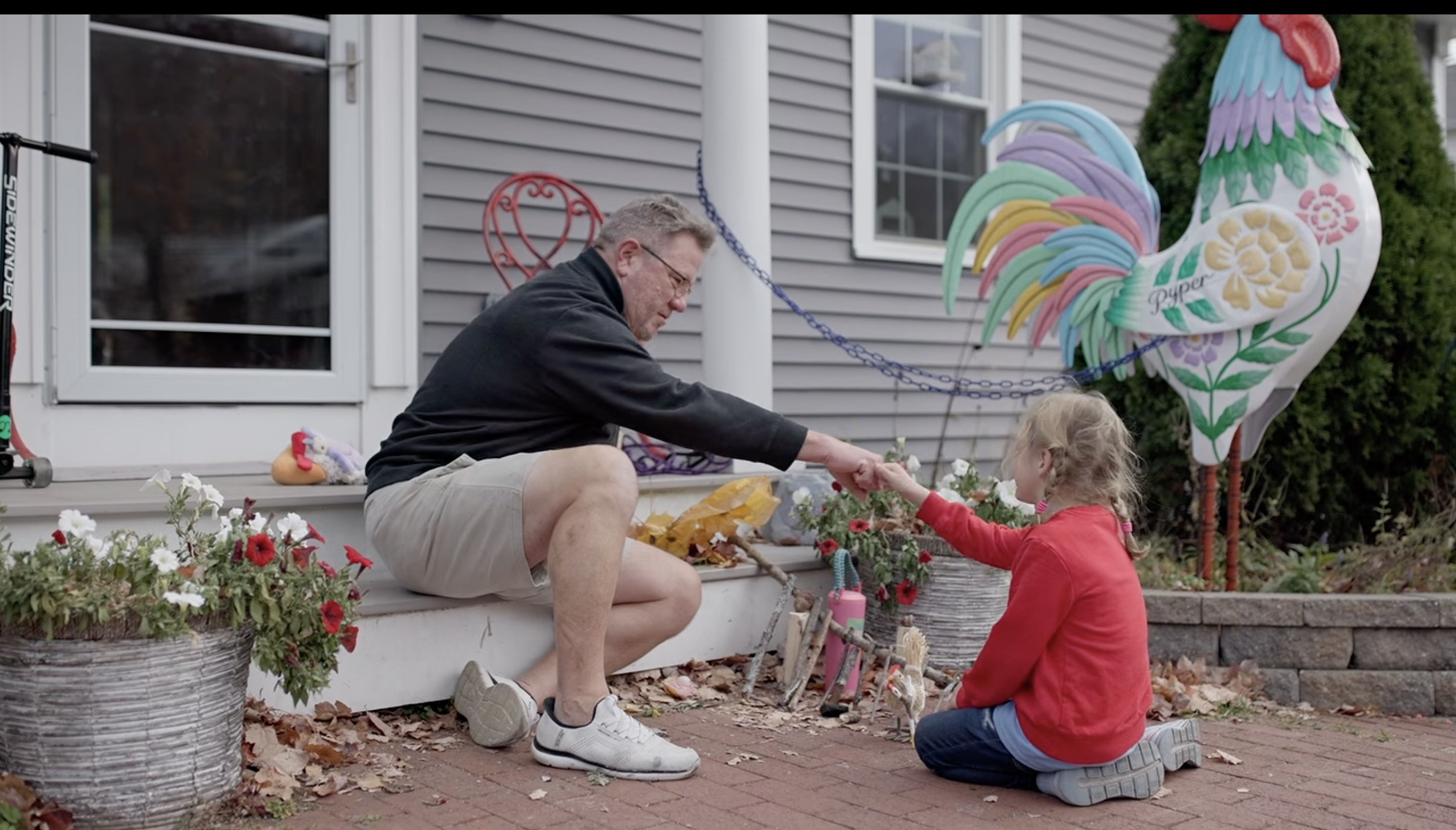
A Maine family has filed a federal lawsuit against their town after being ordered to pay a fine and take down the rooster statues their six-year-old autistic daughter, Pyper, loves.
With support from the Institute for Justice (IJ), a nonprofit, public-interest law firm that represents “everyday people” free of charge, David and Sara LeBlanc are suing the town of Ogunquit on First Amendment grounds.
According to the IJ, the town claims the six-foot tin roosters on the LeBlanc’s own property — they sometimes display up to eight at a time — do not qualify as art, which would be subject to rock-solid constitutional protection as free speech under the First Amendment.
Thanks for subscribing!
The money news that actually matters.
By signing up, you accept Moneywise Terms of Use, Subscription Agreement, and Privacy Policy.
Instead, the town says, they are advertising signs and therefore subject to size limits in the town’s sign code. That’s because the LeBlancs’ home abuts their family-owned restaurant, The Omelette Factory, which has a rooster as its logo.
“That’s unconstitutional. The government doesn’t get to decide what Pyper’s roosters mean and punish her family for it,” a statement from the IJ reads.
“There is no ‘related to your business’ exception to the First Amendment.”
Dozens of community members have put up identical roosters in their own yards in solidarity. According to the IJ, none of them has heard from the town about it.
A real cock-up
The LeBlancs faced a $950 fine for two of their statues, according to local reports. They still aren’t taking them down — and their community is rallying around them.
“Some penalties are worth paying,” David told Moneywise.
Here’s why the couple refuses to take their roosters down — and what rules the Ogunquit government says they’re breaking.
The couple adopted their six-year-old daughter, Pyper, three years ago after a stressful foster situation. Pyper is also autistic, and the roosters help her feel safe and secure. Roosters are a special interest for her.
“She was bounced through so many foster homes that all she really knew was transition,” David said in an email to Moneywise, adding that she’s coping with “great anxiety.”
Comfort objects can be helpful for any child as emotional support tools — although they’re usually small, soft objects like a blanket or a plush, not a six-foot-tall tin rooster.
According to the IJ, the roosters help Pyper get through the hardest part of her day. Like many autistic kids, she struggles with transitions. Shifting from home to school and back again is hard for her. Now, she hides behind the rooster sculpture while waiting for the bus and pats its chest each day when she comes home as part of her daily routine.
Familiar objects are especially important to people with autism, who rely on them to “support the need for sameness, familiarity and well-being,” according to a 2021 article that appeared in the scientific journal Autism.
“Objects give me a sense of security… they are altogether more predictable than people,” says Zoey, a subject interviewed for the article. “They are always there, available, you don’t need to chase them.”
The tall tin roosters could also be a helpful landmark for Pyper if she “elopes” or suddenly leaves her home without telling anyone; a common behaviour in some autistic kids.
Removing the roosters could be a tough emotional blow for Pyper — one that many in the community feel is entirely unnecessary.
“You are hurting a little kid, my little kid,” says David.
Must Read
- Jeff Bezos backs a platform that lets anyone invest in rental homes for as little as $100 — 6 ways to build wealth like a landlord without actually being one
- The tax breaks in Trump's 'big beautiful bill' expire after 2028. Here are 4 moves to make before the window closes
The town government’s argument
Ogunquit says that because the house and the restaurant are on the same property, the roosters count as signs.
Ogunquit has strict rules about signage on both residential and business properties. If the roosters are signs, then they break a few of the government’s rules:
- Freestanding signs can’t be taller than 42 inches in height (although it’s unclear what is considered a “freestanding sign”).
- In order to hang up a sign, both businesses and residences have to get a permit from the Code Enforcement Officer.
- Signs which visually move (the roosters bob slightly on their tall metal legs) are not allowed.
But considering the roosters as signs only makes sense if they’re some sort of advertisement for the restaurant, which the LeBlancs say they aren’t.
“I physically bought them for the house, not our business,” Sara told local news station, WGME. The roosters sit squarely in front of the door of the LeBlancs’ personal home, although they can be seen from the outdoor seating area of their restaurant.
You May Also Like
- Dave Ramsey warns nearly 50% of Americans are making 1 big Social Security mistake — here’s what it is and 3 simple steps to fix it ASAP
- A single line on your car insurance policy could be inflating your premium by up to 30% — here's what to change
Kit Pulliam is a DC-based financial journalist with over five years of experience writing, editing and fact-checking financial content.