Chris Olave, wide receiver for the National Football League’s New Orleans Saints, is off to a great start this season with 27 receptions, 375 yards and one touchdown in three games.
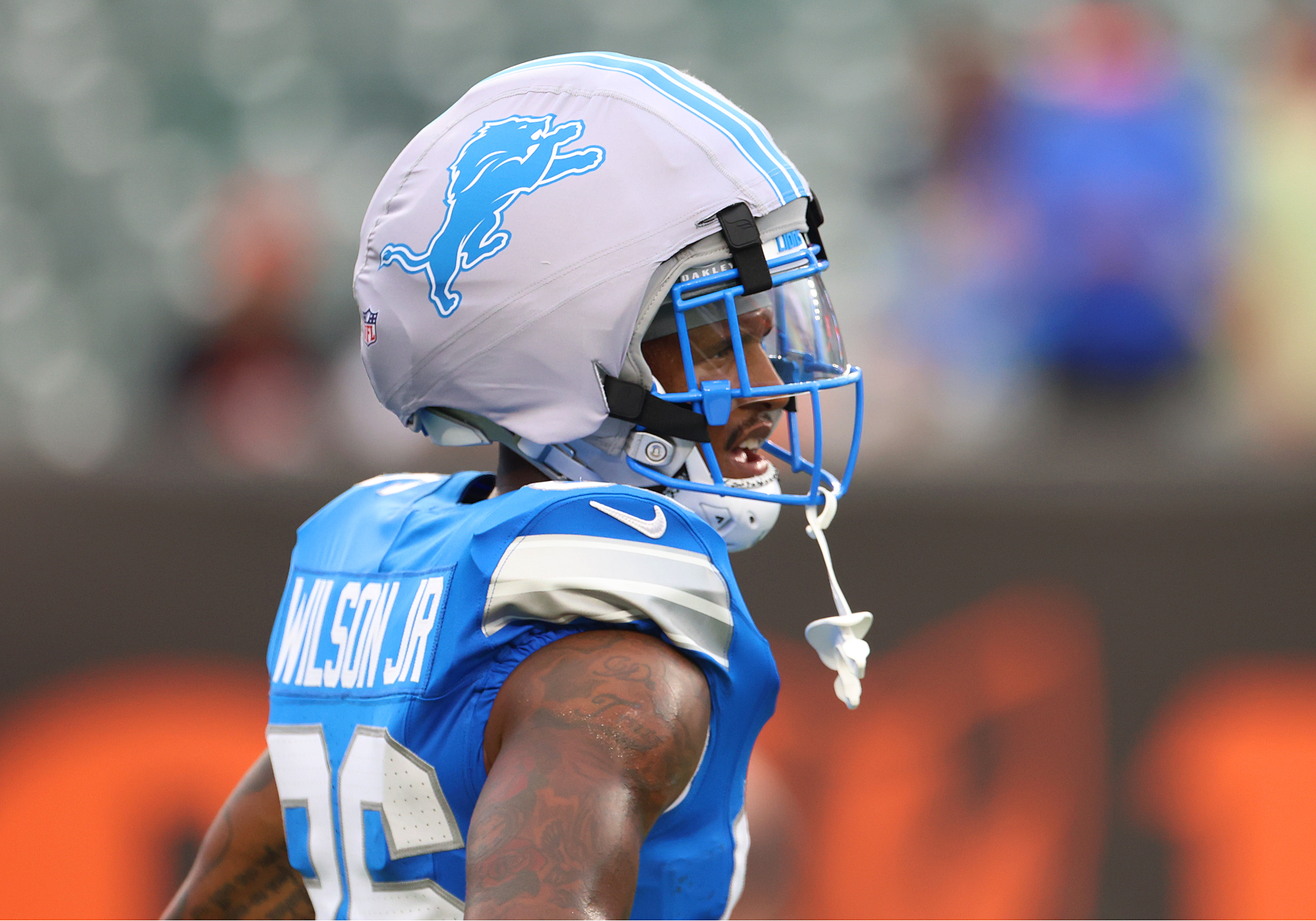
Yet for some fans, Olave may be known as somewhat of an equipment trend-setter with his guardian cap — the soft-shelled, padded layer that covers his football helmet, making it look unusually big.
Derided by some as a comical piece of equipment that makes players look like bobbleheads, the guardian cap serves as an important safety precaution in a league widely known for its concussion problems. In 2025, for instance, NFL players suffered 168 diagnosed in-game concussions, The New York Times reported. That’s up from 129 in 2024.
Olave is a prime example of the league’s concussion woes, as he suffered four concussions in his first three NFL seasons, including a particularly nasty head injury in 2024 that had him contemplating retirement.
The guardian cap, it seems, changed that equation. Olave, who is a father of one, started wearing the protective cap during games in the first week of the 2026 season and has no regrets.
“I know all the head injuries I’ve had in my career, so it was just a decision I had made,” he said, according to Heavy. “I got kids now, I want to be able to live the long game. It’s not all about football. I want to live [a] regular life after I’m done with football, I love my kids to death. I don’t really care how it [the guardian cap] looks no more, I just gotta throw it on.”
Ahead of the 2026 season, the NFL made guardian caps mandatory during contact practices for players of all positions except kickers, punters and quarterbacks. The caps, however, are still optional for in-game use.
Olave may have decided to use the guardian cap during games for health reasons, but there are financial implications to his decision as well.
When he signed a four-year, $132 million extension with the Saints in July 2026, the team inserted a rare injury clause into the contract that specifically mentions “concussions and respiratory pulmonary embolism.” Along with the concussions, Olave was also diagnosed with blood clots in his lung just before the 2025 NFL season began.
Under the injury clause in his contract, if Olave were to suffer a concussion (or a recurrence of blood clots) that rendered him unable to play football, the Saints could void the remaining injury guarantees in his contract.
More players are taking precautions
When it comes to wearing a guardian cap during a game, Olave is hardly alone. In fact, he’s one of 23 NFL players that wore the cap in week 1 of the 2026 season, as the risk of not just health but financial injury from concussions raises the stakes across the league.
Detroit Lions WR Cedrick Wilson Jr. wearing a guardian cap. Photo: Jeff Moreland/Icon Sportswire via Getty Images
That’s hardly a surprise, not when a player could have millions of dollars in future earnings potentially riding on his ability to stay medically cleared for football. Legal and financial experts say NFL players who wear the guardian cap are savvy in taking additional precautions as a form of career and wealth protection.
“Yes, precautions are a way to financially protect in these scenarios, and they’re a minimal cost compared to how much a brain injury will cost to care for,” Jae E. Lee, managing partner of Jae Lee Law, a personal injury law firm, told Moneywise. “That’s not just the medical side of things, but the lost ability to work and the years and years it may go on.”
Any safety feature that reduces the chance of a head injury should be in an NFL player’s financial plan, Lee said.
“If you do have a head injury, that goes into your history and will always be brought up with health and coverage questions,” she noted. “A concussion may seem like just a few difficult weeks, but from the insurance standpoint, which I’m very familiar with, it is always pulled up with every new claim or application.
“It’s always in your best interest to protect yourself in this area, though avoiding an injury in the first place is even more ideal.”
The risks are critical to a football player’s financial picture, which could sour if one has to retire due to concussions. Beyond lost salary, an early exit could also mean the end of endorsements, retirement benefits, healthcare coverage and a player’s long-term earning potential.
Advertisement
“Professional players won’t notice those costs until decades after their football years,” Lee stated. “Brain injuries cause all sorts of problems with focus, memory, mood, as well as judgment, and they may not show up until later on, or get worse with time.
“The ongoing care needed, including therapy and medications, can really add up while employment rates tend to fall after a brain injury,” Lee continued. “The injury that ends the football career can additionally close the door on opportunities like coaching or broadcasting because you need that memory, focus and correct temperament that injuries like these can affect, so those lost playing years aren’t the only loss.”
Making matters worse, research suggests taking repeated hits to the head may have a connection with a progressive degenerative brain disease called chronic traumatic encephalopathy (CTE).
Why the NFL needs to support concussion precautions
Experts believe players like Olave must strongly consider wearing protective helmet caps, and that the NFL needs to step up and encourage concussion precautions both on and off the field.
“A guardian cap, or safer helmet, is career protection, income protection and family protection,” Michael Barasch, managing partner of the law firm Barasch & McGarry, which represents more than 50,000 first responders and survivors of 9/11, told Moneywise.
According to experts like Barasch, one additional precaution against concussions may help players with preserving medical clearance, future salary, endorsement deals and decades of earning power.
“After 9/11, too many heroes learned the hardest version of that truth,” Barasch said. “Protective decisions made in real time can shape health and finances for the rest of a person’s life.”
Barasch points out that 9/11 health and compensation system exists because ground zero exposure created long-term illnesses linked to cancers, respiratory disease, aerodigestive disorders, mental health conditions, cognitive decline and family loss that workers could not carry alone.
“The NFL should treat [concussion] prevention, monitoring and post-care as one financial protection plan,” Barasch added. “There’s nothing more meaningful than telling a dying 9/11 first responder or survivor that the September 11th Victim Compensation Fund may provide money to help protect a home, support children, cover family needs or continue benefits after death. That is what ‘Never Forget’ means in practice.”
As Barasch noted, there’s a lot that the NFL can learn from the September 11th Victim Compensation Fund.
“The NFL should study the 9/11 model and build a stronger long-term brain-health system for players, including independent research, lifetime neurological monitoring, guaranteed treatment, family support and compensation when brain injuries shorten careers or damage lives,” Barasch said.
“When institutions benefit from sacrifice, they also inherit responsibility. The NFL has the money, medical infrastructure and moral obligation to protect players long after they leave the field.”
Brian O'Connell is a US based former Wall Street bond trader and author of two best-selling books: "The 401k Millionaire" and "CNBC's Creating Wealth". His work is featured on national finance and business platforms like TheStreet.com, CBS News, CNN, The Wall Street Journal and Forbes
The content provided on Moneywise is information to help users become financially literate. It is neither investment, tax nor legal advice, is not intended to be relied upon as a forecast, research or investment advice, and is not a recommendation, offer or solicitation to buy or sell any securities, enter into any loan, mortgage or insurance agreements or to adopt any investment strategy. Tax, investment and all other decisions should be made, as appropriate, only with guidance from a qualified professional. We make no representation or warranty of any kind, either express or implied, with respect to the data provided, the timeliness thereof, the results to be obtained by the use thereof or any other matter. Advertisers are not responsible for the content of this site, including any editorials or reviews that may appear on this site. For complete and current information on any advertiser product, please visit their website.
†Terms and Conditions apply.
You’re in.
Welcome to Moneywise! Keep an eye on your inbox for your first newsletter, free Warren Buffett investing guide, and full commenting access. Welcome to Moneywise! Keep an eye on your inbox for your first newsletter, free Warren Buffett investing guide, and full commenting access.
Money news that matters. Free in your inbox.
Join 250,000+ readers getting the money news that matters. Our free newsletter cuts through the noise. Plus get a free Warren Buffett investing guide.