Mar 19, 2025
The 30-year fixed mortgage is the most popular type of home loan. Borrowers benefit from the 30-year by getting steady, affordable monthly mortgage payments with no surprises. A loan of 30 years is a particularly good choice for homebuyers who think they may settle in their houses for a while.
1. Comparison shop for the best rate
Shoppers looking for the lowest interest rate have a lot of options today. Plenty of websites aggregate national rates and provide up-to-date information on terms and different aspects of mortgage loan offerings.
If you're a member of a credit union through your job, ask to see its current rates. Credit unions typically offer competitive rates, although the application process may be slower and the underwriting guidelines may be stricter.
Advertisement
If you’re not currently a member of a credit union, find a nonprofit credit union in your area that opens its membership to local residents.
Must Read
- Dave Ramsey warns nearly 50% of Americans are making 1 big Social Security mistake — here’s what it is and the simple steps to fix it ASAP
- Robert Kiyosaki begs investors not to miss this ‘explosion’ — says this 1 asset will surge 400% in a year
- Vanguard reveals what could be coming for U.S. stocks, and it’s raising alarm bells for retirees. Here’s why and how to protect yourself
Join 250,000+ readers and get Moneywise’s best stories and exclusive interviews first — clear insights curated and delivered weekly. Subscribe now.
2. Boost your credit score
A better credit score brings better mortgage rates.
So, take some steps to raise your score. Pay down debt, especially on credit cards. Don't open new credit cards, but don't close old ones either. Doing that will reduce your available credit — which could hurt your score.
Get your hands on your credit reports and make sure there are no errors that could be dragging down your credit score.
A 2012 study from the Federal Trade Commission found that 20% of U.S. consumers had errors on their credit reports that needed correcting.
3. Consider a larger down payment
Homebuyers who can make larger down payments tend to land lower 30-year mortgage rates.
If you're willing to put more skin in the game, a lender will see you as a better risk and reward you with a better rate. As an added bonus, you won't be forced to buy private mortgage insurance, or PMI, if you can make a down payment of at least 20% of your home's purchase price.

Advertisement
Don't have that kind of down payment cash? If you're a first-time homebuyer, down payment assistance may be available in the form of a government grant or low-interest loan.
Private mortgage insurance is different from homeowners insurance, which you will definitely need.
More: How much should you put down on a house?
Read More: Dave Ramsey says this 7-step plan ‘works every single time’ to kill debt, get rich in America — and that ‘anyone’ can do it
4. Pretend your loan has a shorter term
One smart interest-cutting strategy is to treat your 30-year home loan like a mortgage with a 15- or 20-year payback.
Use a loan calculator to see what your payment would be under a shorter-term scenario, then add the difference as a principal pay-down each month.
Advertisement
You'll still have the lower minimum payment of a 30-year mortgage but will have the control to pay more on your principal if you choose.
While this won't reduce your annual percentage rate, it will cut your effective interest rate, meaning you'll pay less interest over the life of the loan because you've steadily reduced your principal balance.
More: Information on 20 years mortgage rates
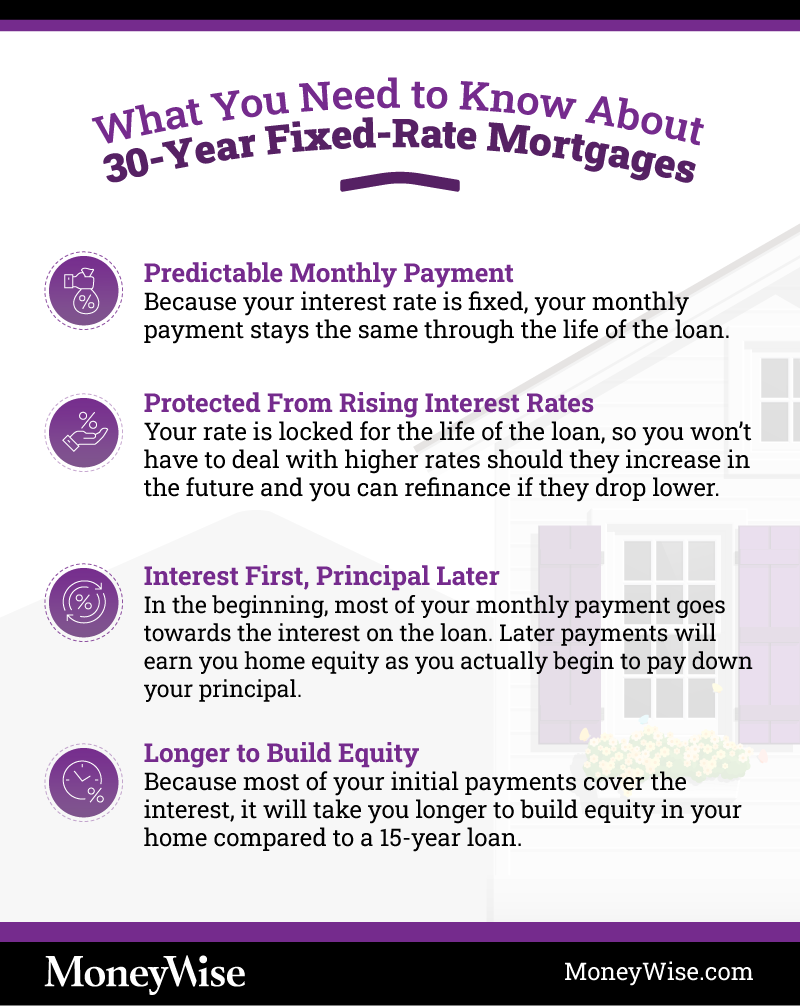
How 30-year fixed-rate mortgages work
You May Also Like
- Turning 50 with $0 saved for retirement? Most people don’t realize they’re actually just entering their prime earning decade. Here are 6 ways to catch up fast
- This 20-year-old lotto winner refused $1M in cash and chose $1,000/week for life. Now she’s getting slammed for it. Which option would you pick?
- Warren Buffett used these 8 repeatable money rules to turn $9,800 into a $150B fortune. Start using them today to get rich (and stay rich)
- Here are 5 easy ways to own multiple properties like Bezos and Beyoncé. You can start with $10 (and no, you don’t have to manage a single thing)

Doug Whiteman was formerly the editor-in-chief of MoneyWise. He has been quoted by The Wall Street Journal, USA Today and CNBC.com and has been interviewed on Fox Business, CBS Radio and the syndicated TV show "First Business."

Mortgages • Apr 17
What is a home equity line of credit (HELOC)?

Mortgages • Mar 19