• Discounts and special offers
  • Subscriber-only articles and interviews
  • Breaking news and trending topics

Already a subscriber?

By signing up, you accept Moneywise's Terms of Use, Subscription Agreement, and Privacy Policy.

Not interested ?

Retirement Planning
Photo of YouTuber Stephen Antonioni hiking with family YouTube/Stephen Antonioni

'I'm not retired and I don't intend to be': YouTuber says 'Camp FIRE' saving allows bursts of retirement when you need it

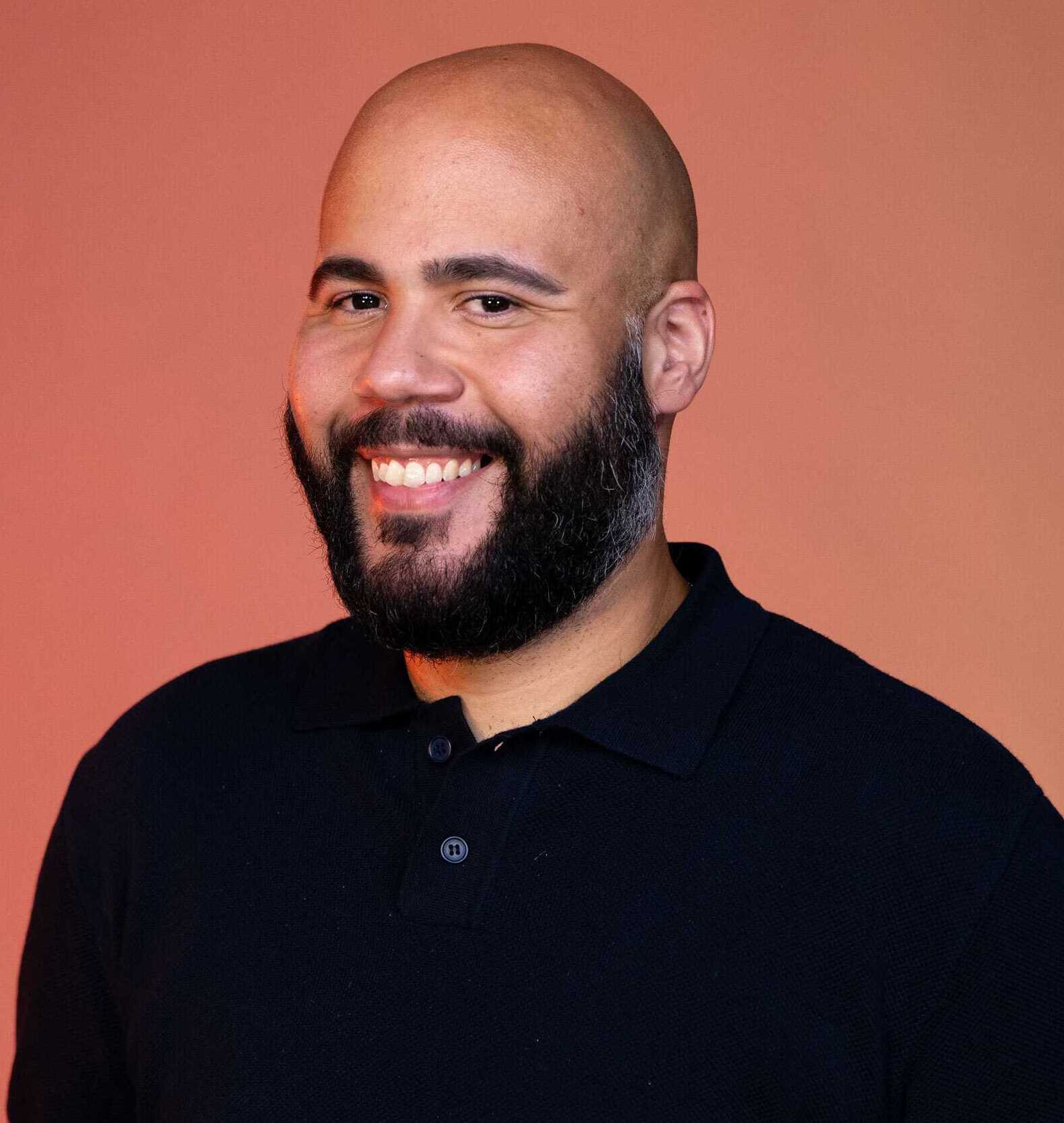
Steve Antonioni says he’s known since high school that he was never interested in a fully traditional life path. Now he’s spearheading a less traditional form of the FIRE movement.

The Toronto-based YouTuber (1) told Business Insider that back in 2022, when he was 28, he had saved roughly $90,000 in four years — enough to quit his corporate job and go all-in on YouTube. He set a goal of $1 million by 35, the number he figured would give him some form of financial independence (2).

Advertisement

Four years on, his goals have shifted a bit. "I'm not retired, and I don't intend to be," he told the publication in a 2026 follow-up interview. "I still want to create productive things (2)."

What Antonioni has landed on is something he calls "Camp FIRE" — a shorter-term, more flexible version of the FIRE (financial independence, retire early) movement. The name is inspired in part by his camping trips in backcountry Canada.

What is Camp FIRE?

Traditional FIRE asks a lot. Most committed adherents aim to save 50% to 75 (3)% or more of their income for a decade or longer (4), with the goal of accumulating enough wealth — often 25 times (3) annual expenses, based on the 4% withdrawal rule (5) — to never work again. It's an all-or-nothing proposition with a very long runway.

Camp FIRE, as Antonioni describes it, compresses that runway.

Instead of spending 10 to 20-plus years in aggressive accumulation mode, you could apply FIRE principles for just three to five years to create enough capital to make a meaningful life pivot, such as switching careers or taking extended time off, well before reaching full financial independence. Then, if you choose, you could do it again.

Antonioni's done it twice himself. The first time, he saved enough in his 20s to leave his corporate job and create YouTube content. The second stage involved building up enough from YouTube to fund an 18-month sabbatical — what he called a "creative reset" — during which he became a father and began writing a book.

The idea, he says, is cyclical by design.

Must Read

Join 250,000+ readers and get Moneywise’s best stories and exclusive interviews first — clear insights curated and delivered weekly. Subscribe now.

Why the timing makes sense

Camp FIRE's framework taps into a broader cultural shift. Data from Gusto, which analyzed over 300,000 small and mid-sized businesses, showed sabbatical rates roughly doubled between January 2019 and January 2024, with the trend most pronounced among workers aged 27 to 34 (6).

Advertisement

Meanwhile, an Empower survey found that over half of Americans are open to post-retirement employment, and 41% cite personal fulfillment as the main reason they'd keep working (7). That's Camp FIRE in spirit, even if they've never heard the name.

The concept also sidesteps one of FIRE's real-world problems: Traditional FIRE requires sustained extreme frugality, often for well over a decade.

But as Antonioni acknowledges, that's harder now than it was when he started saving.

"The cost of groceries has literally doubled in many cases," he told Business Insider. "For people who are looking to get into the housing market, it's a pretty dramatic picture. So, I think people are up against more today."

He may be right. Grocery prices alone have risen (8) roughly 25% since 2019 — driven (9) by a 9.9% surge in 2022 alone, the steepest annual increase since 1979 — with no return to pre-pandemic norms in sight.

The mindset shift that makes it work

For Antonioni, the practical engine of Camp FIRE is a reframe: Stop thinking about personal finances like a household and start thinking about them like a business.

Advertisement

"Even the word 'saving' kind of messes you up from the first place," he told Business Insider, because the language of corporate and personal finance rarely overlaps. Antonioni says it can be helpful to directly compare the two.

“Your savings are your profit,” he said. "If you want to save more money, you've got to think about your financial situation in the same way. You want to run your life in such a way that you're earning a profit, because that profit is yours.”

In practice, for him, increasing profits meant living below his means by eating the same two or three meals daily and engineering routines that kept his costs consistently low.

Read More: Dave Ramsey says this 7-step plan ‘works every single time’ to kill debt, get rich in America — and that ‘anyone’ can do it

Is Camp FIRE Right for You?

Antonioni is the first to admit that Camp FIRE is not for everyone, and that it was much easier when he was single. "Now, with a family, it's a lot harder to live that exact same way," he admitted (2).

What sets Camp FIRE apart from concepts (10) like Barista FIRE, semi-retirement where part-time work covers basic expenses, and Coast FIRE, which front-loads investing until compound growth can do the rest, is the intention to cycle through it repeatedly, using each time as a runway to something new rather than a permanent exit.

So, for anyone who has looked at traditional FIRE's decade-long demands and thought, "I can't do that, but I need something to change," Camp FIRE offers a shorter commitment. It doesn't promise permanent freedom, but you do get some breathing room.

Article Sources

We rely only on vetted sources and credible third-party reporting. For details, see our ethics and guidelines.

YouTube (1); Business Insider (2); CNBC (3); Wealthtender (4); Prudential (5); Gusto (6); Empower (7),(10); Keeping Up With Inflation (8); USDA Economic Research Service (9)

You May Also Like

Share this:

With a writing and editing career spanning over 15 years, Emma creates and refines content across a broad spectrum of industries, including personal finance, lifestyle, travel, health & wellness, real estate, beauty & fitness and B2B/SaaS/tech.

more from Emma Caplan-Fisher

Explore the latest

Disclaimer

The content provided on Moneywise is information to help users become financially literate. It is neither investment, tax nor legal advice, is not intended to be relied upon as a forecast, research or investment advice, and is not a recommendation, offer or solicitation to buy or sell any securities, enter into any loan, mortgage or insurance agreements or to adopt any investment strategy. Tax, investment and all other decisions should be made, as appropriate, only with guidance from a qualified professional. We make no representation or warranty of any kind, either express or implied, with respect to the data provided, the timeliness thereof, the results to be obtained by the use thereof or any other matter. Advertisers are not responsible for the content of this site, including any editorials or reviews that may appear on this site. For complete and current information on any advertiser product, please visit their website.

†Terms and Conditions apply.