One business that’s been booming amid the pandemic is auto theft, which skyrocketed last year.
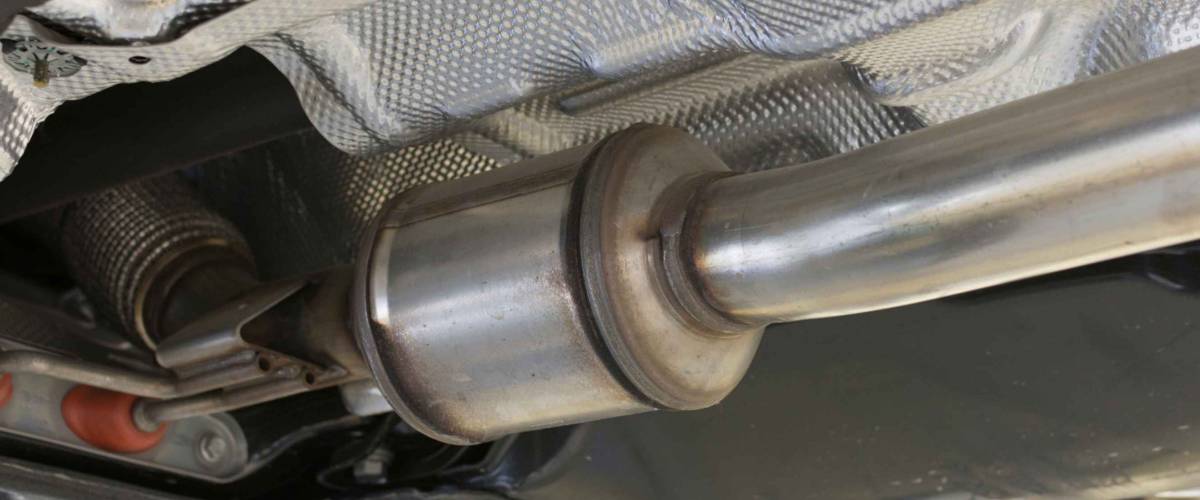
And increasingly, thieves aren’t even targeting the whole car; instead, they’re going after the valuable container of precious metals attached to every car’s underside: the catalytic converter.
All across America, local police departments are reporting surges in cases of stolen catalytic converters, and motorists — many of whom are getting stuck with huge repair bills — are looking for ways to protect themselves.
Thanks for subscribing!
Read the best of Moneywise in 5 minutes or less.
By signing up, you accept Moneywise Terms of Use, Subscription Agreement, and Privacy Policy.
Read on to find out why this crime wave is suddenly cresting and for tips on how to make sure your auto insurance will protect you if your vehicle is targeted.
How bad is the problem?
At the moment, there’s scarce national data on the problem, but there are disturbing statistics coming out of many U.S. cities.
In Denver, to take one particularly stark example, there were 15 catalytic converters reported stolen in 2019. In 2020 it was 257.
But in January of 2021 alone 108 thefts were reported..
In one incident in the city in February, 14 catalytic converters were stolen in about an hour when thieves hit a vehicle fleet, causing more than $20,000 in damage.
Other cities, such as S. Louis and Wichtia, Kansas, are reporting similarly steep spikes, according to the New York Times.
Must Read
- The ultra-rich use these 5 real estate strategies to build wealth while they sleep — you can start with just $100
- Here’s the average income of Americans by age in 2026. Are you keeping up or falling behind?
- Insurance companies profit most from drivers who auto-renew without shopping around. Comparing 100+ quotes takes 2 minutes and costs nothing
Join 250,000+ readers and get Moneywise’s best stories and exclusive interviews first — clear insights curated and delivered weekly. Subscribe now.
Why are catalytic converters in demand?
A catalytic converter has been installed between the engine and muffler of just about every car and truck sold in the U.S. since the mid-1970s.
Inside, they’re coated with precious metals like platinum, rhodium and palladium, which clean toxic pollutants from the vehicle’s exhaust.
As emissions rules become increasingly strict around the globe, especially in China, demand for the materials used in catalytic converters has also skyrocketed.
As a result, the materials found in catalytic converters are, quite literally, more valuable than gold. The price of rhodium, one of the precious metals found in catalytic converters, has soared from less than $650 an ounce around 2015 to almost $22,000 an ounce in 2021. That’s more than 10 times the price of gold.
On an average car, a converter can cost up to $2,000 to replace or more, depending on the make and model.
And, unfortunately for car owners, catalytic converters aren’t difficult to steal. A single person armed with only a hacksaw and a jack can easily slide under a vehicle and cut off the target device in mere minutes. With larger vehicles, like trucks and SUVs, that sit higher off the ground, the jack isn’t even necessary.
Booming black market
It’s easy to find ads promising quick cash for catalytic converters on sites like Facebook Marketplace and Craigslist.
The most valuable devices are those taken from certain older foreign cars, which contain more of the precious metals than newer vehicles.
Another model that’s popular with thieves is the Toyota Prius. Because the hybrid doesn’t use its gasoline engine as often as a standard car, the metals in Prius converters don’t burn out as fast.
What can I do?
Anyone who owns a car is a potential target for catalytic converter theft, and should be be taking the following measures:
- Park in well-lit areas. If you have your own garage, park inside rather than on the street. In a public lot, park near a building entrance or the access road, as pedestrian traffic could discourage thieves.
- Use anti-theft devices. You can get devices to attach to your converter to make it harder to steal, or calibrate your car alarm to be set off by vibration, so the act of a thief trying to saw off your converter will trigger the alarm. You can also have the converter welded in place to make it more difficult to remove.
- Put your VIN on your converter. Etching your vehicle identification number or license plate number onto your converter can make it easier to track down in the event that it is stolen.
Strengthen your protection with auto insurance
Even if you take steps, you can still find yourself a victim of catalytic converter theft.
In the case of one man interviewed by The New York Times, the converter was stolen from his used Toyota Prius, but he didn’t have full insurance coverage and was forced to pay more than $3,000 to get it replaced — almost half of what he’d paid for the car itself.
Don’t put yourself in that position. Decide how much coverage you need from your auto insurer — and if you’re at all worried about theft, you’ll need comprehensive coverage.
Next, make sure you aren’t paying too much. If you haven’t comparison-shopped over the last six months, you could be wasting more than $1,000 per year. With a free quote-comparing service like Smart Financial, you could find the best price in minutes.
And if you’ve found yourself driving less during the pandemic, you could convince your provider to give you a break. Find out if you’re eligible for a COVID “stimulus check” from your insurance company in the form of a rebate or credit on your premiums.
Don’t let yourself become be another statistic contributing to this alarming trend.
You May Also Like
- JP Morgan sees gold hitting $6,000/oz before 2027 — and a Gold IRA lets you hold the physical metal while deferring the tax bill. Get your free guide from Priority Gold
- Dave Ramsey warns nearly 50% of Americans are making 1 big Social Security mistake — here’s what it is and the simple steps to fix it ASAP
- Thanks to Jeff Bezos, you can now become a landlord for as little as $100 — and no, you don't have to deal with tenants or fix freezers. Here's how
- Millionaires under 43 are reshaping investing — just 25% of their portfolios are in stocks. Here’s where their money is going
Justin Anderson was formerly a reporter at MoneyWise. He has a degree in Journalism from Ryerson University and his career has seen him cover everything from business and finance to the entertainment industry to politics, with plenty in between.
News • May 05
What is Dr. Anthony Fauci's net worth?
Insurance • Apr 20