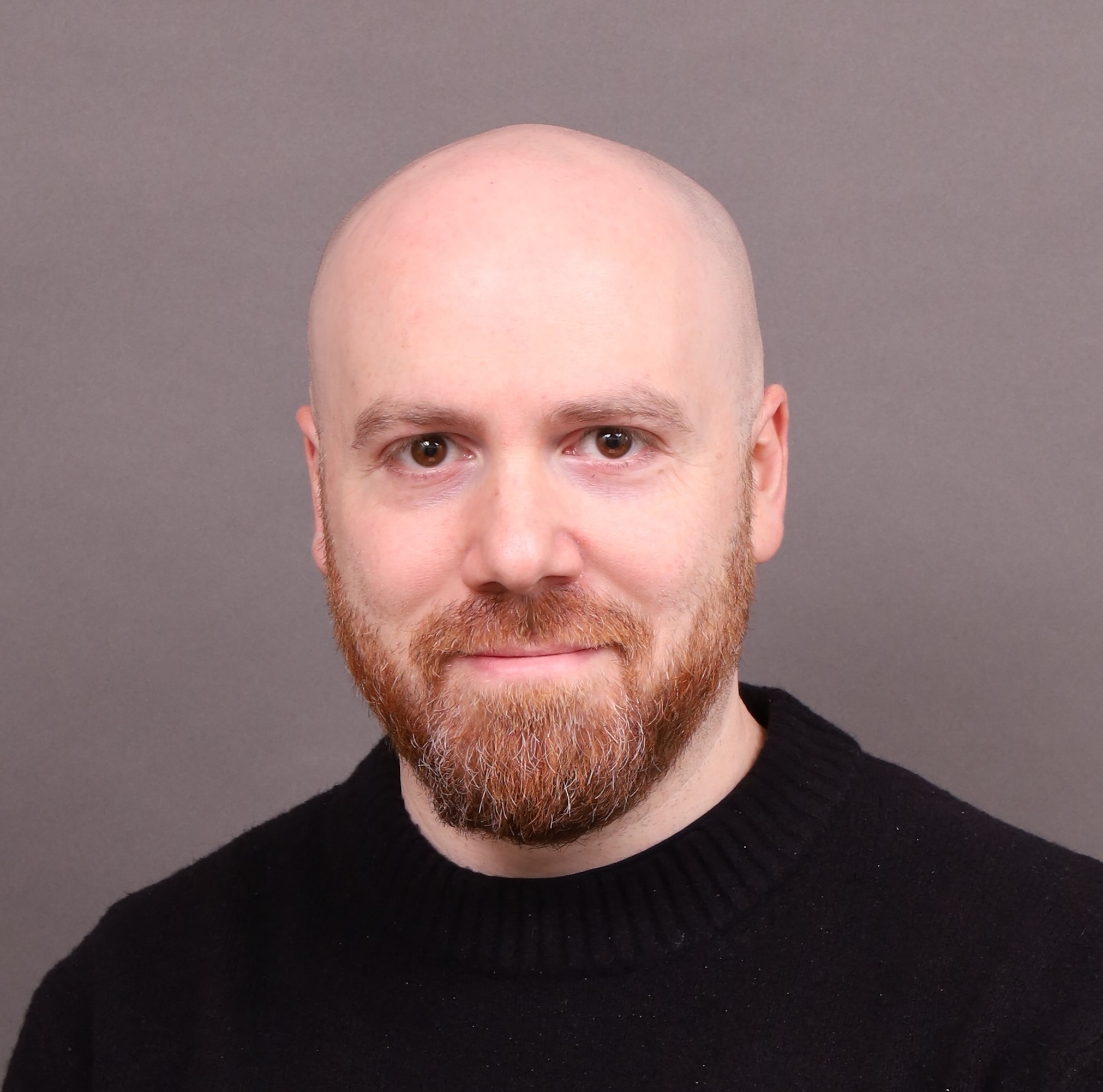
Back in January, President Donald Trump tapped Kevin Warsh (1), a 56-year-old former Federal Reserve governor and one of the central bank's most persistent outside critics, to become the next chair of the Federal Reserve.
Nearly four months later, Warsh was confirmed as the next Fed chair, succeeding Jerome Powell (1).
Notably, Warsh has become the richest Fed chair in modern history. Trump has long had it out for Powell, and it looks like the president got his wish to replace him. The Senate voted on May 12 to confirm Warsh for a 14-year term on the Fed's Board of Governors (2).
Warsh, who served on the Fed's Board of Governors from 2006 to 2011, takes over an institution he has spent the better part of a decade publicly questioning over its expanded balance sheet, its communications strategy, and what he has described as a drift beyond the central bank's core mandate of price stability and maximum employment.
Many Democratic senators opposed Warsh's nomination, as they worried he would simply execute Trump's wishes to cut interest rates, something Powell had been reluctant to do, although some Democrats did cross the aisle this week to advance Warsh’s nomination (3). While Powell's term as a governor runs until January 2028, his tenure as chair expires on Friday, May 15.
From Stanford to the Fed's youngest-ever governor
Warsh earned a bachelor's degree in public policy from Stanford University in 1992 and a law degree from Harvard Law School in 1995 (4). He spent the next seven years at Morgan Stanley in New York (5), rising to vice president and executive director in the firm's mergers-and-acquisitions group. In 2002, he joined the George W. Bush White House as a special assistant to the president for economic policy at the National Economic Council.
Bush nominated him to the Fed in early 2006. At 35, Warsh became the youngest person ever confirmed to the Board of Governors (1). He served as the board's primary liaison to financial markets, a role that placed him at the center of the 2008 financial-crisis response alongside former Treasury Secretary Henry Paulson and Fed Chair Ben Bernanke.
Warsh resigned in February 2011, citing a desire to return to the private sector (6). His exit came amid public disagreements with Bernanke over the second round of quantitative easing — the bond-buying program known as QE2 (7) — which Warsh argued risked stoking inflation and distorting asset prices.
In an unusual move for a sitting governor, he laid out his dissent in a Wall Street Journal op-ed in November 2010 (8), where he called out the "emerging ethos" around U.S. monetary policy "to be dangerous and defeatist and debunked by America's own exceptional economic history."
Must Read
- Dave Ramsey warns nearly 50% of Americans are making 1 big Social Security mistake — are you doing the same?
- Thanks to Jeff Bezos, you can now become a landlord for as little as $100 — and no, you don't have to deal with tenants or fix freezers. Here's how
- Robert Kiyosaki says this 1 asset will surge 400% in a year and begs investors not to miss this ‘explosion’
Join 250,000+ readers and get Moneywise’s best stories and exclusive interviews first — clear insights curated and delivered weekly. Subscribe now.
A longtime critic prepares to run the institution
Since leaving the Fed, Warsh has been a distinguished visiting fellow at Stanford's Hoover Institution (9), where he has continued to write and speak about monetary policy. He has argued the central bank suffers from "mission creep," wading into climate, financial-regulation and social-equity debates that, in his view, lie outside its remit. He has also pushed for a more rules-based framework for setting interest rates and a leaner Fed footprint in markets.
His policy posture has tracked the cycle. In 2022 and 2023, as inflation peaked at a four-decade high of 9.1% in June 2022 (10), according to the Bureau of Labor Statistics, Warsh called for sharper, faster tightening. By 2025, with price growth cooling, he had moved toward advocating measured rate cuts and a smaller balance sheet — a posture closer to what Trump has publicly demanded of Powell.
Warsh is now the second consecutive Fed chair without a Ph.D. in economics. Powell, a lawyer and former private-equity executive, broke a long tradition of academic economists running the central bank when Trump first nominated him in 2017. Warsh was reportedly on that shortlist as well (11), finishing behind Powell. The last Fed chair before Powell to lack a doctorate was G. William Miller, whose brief tenure in the late '70s is best remembered for the inflation that followed.
Warsh is married to Jane Lauder, a granddaughter of Estée Lauder co-founder Estée Lauder and an executive at the cosmetics company. Forbes has estimated Jane Lauder's net worth at roughly $5 billion (12), placing the couple among the wealthiest pairings ever to occupy the Eccles Building. Warsh is now the 17th chair of the Federal Reserve (13) — and the first to take the gavel as a sitting outside critic of the institution he’s been asked to run.
Article Sources
We rely only on vetted sources and credible third-party reporting. For details, see our ethics and guidelines.
CNN (1); Federal Reserve History (2); CNBC (3); The Hill (4); Newspapers.com (5),(6); U.S. Federal Reserve (7),(14); Investopedia (8); The Wall Street Journal (9),(12); Hoover Institution (10); U.S. Bureau of Labor Statistics (11); Forbes (13).
You May Also Like
- Turning 50 with $0 saved for retirement? Most people don’t realize they’re actually just entering their prime earning decade. Here are 6 ways to catch up fast
- Inside a $1B real estate fund offering access to thousands of income-producing rental properties — with flexible minimums starting at $10
- Vanguard’s outlook on U.S. stocks is raising alarm bells for retirees. Here’s why and how to protect yourself
- Here are 5 easy ways to own multiple properties like Bezos and Beyoncé. You can start with $10 (and no, you don’t have to manage a single thing)
Dave Smith is the VP of Content at Wise Publishing and Editor-in-Chief at Moneywise and Money.ca. His work has also been published in Fortune, Business Insider, Newsweek, ABC News, and USA Today.