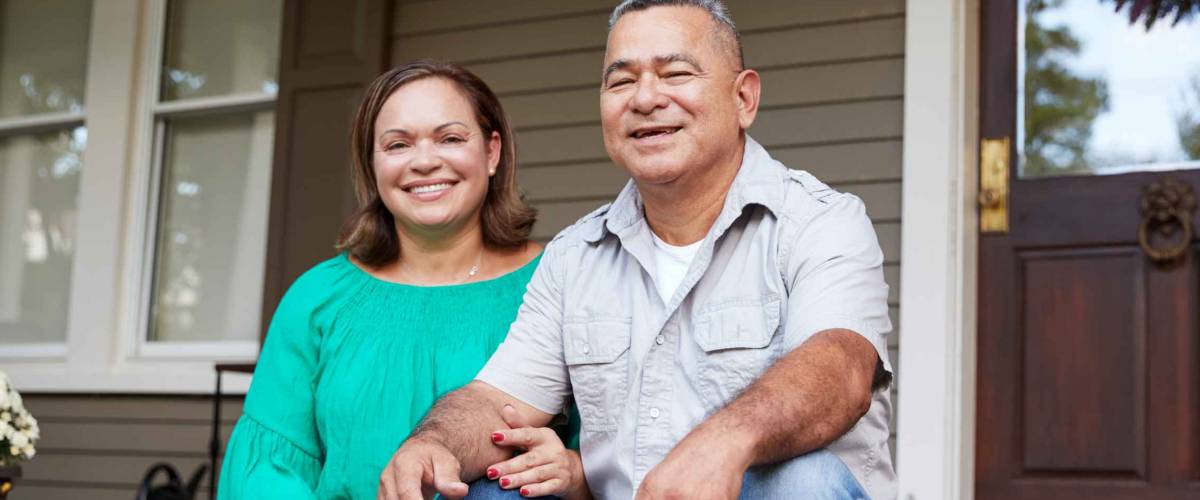
More than 2 million homeowners who thought they couldn't afford to refinance their mortgages — which can provide huge savings over time but takes a bit of cash upfront — can now get a cheaper loan through a new government option.
It's a program that will allow borrowers to refinance at today's historically low mortgage rates and cut their monthly housing costs by hundreds of dollars.
New option allows borrowers to save up to $3K a year
Thanks for subscribing!
Stay ahead of the mortgage market, free.
By signing up, you accept Moneywise Terms of Use, Subscription Agreement, and Privacy Policy.
This summer, government-sponsored mortgage giants Fannie Mae and Freddie Mac will launch a refinance option offering reduced interest rates that could save financially disadvantaged borrowers as much as $250 a month.
"Last year saw a spike in refinances, but more than 2 million low-income families did not take advantage of the record low mortgage rates by financing," says Mark Calabria, director of the Federal Housing Finance Agency, which regulates Fannie and Freddie.
To qualify, borrowers must have a federally backed mortgage and earn no more than 80% of their area’s median income.
A lender will be required to cut a qualified borrower's monthly mortgage payment by $50 or more and provide at least a half-point (0.5) interest rate reduction — say, from 3.5% down to 3%.
“This new refinance option is designed to help eligible borrowers who have not already refinanced save between $1,200 and $3,000 a year on their mortgage payment,” Calabria says in a news release.
More: Early mortgage payoff calculator
Must Read
- Jeff Bezos backs a platform that lets anyone invest in rental homes for as little as $100 — 6 ways to build wealth like a landlord without actually being one
- The tax breaks in Trump's 'big beautiful bill' expire after 2028. Here are 4 moves to make before the window closes
How the program cuts refinance costs
Refinancing costs vary by state and lender, but it’s not unusual to pay 3% or more of the amount you owe one your house in refinance fees — "closing costs."
If you qualify for the FHFA’s new program, your lender must provide a credit of up to $500 for an appraisal if you need one and waive the usual 0.5% fee for borrowers with loan balances at or below $300,000.
But to be eligible, you must not have missed a payment in the past six months and have no more than one missed payment in the past 12 months.
Plus, you must meet specific requirements related to how much debt you're carrying and how much equity you have in your home.
Finally, you can't have a credit score lower than 620. If you’re not sure if yours will make the cut, it’s easy to peek at your credit score for free.
Millions more can benefit from a refi, a new study shows
If you don’t qualify for the government’s new refi option, you may still want to consider trading in your loan for a cheaper one. Average 30-year fixed mortgage rates have fallen below 3% again for the first time since late February.
Based on the lower interest rates of late, 13 million mortgage holders can still save an average $283 a month by refinancing, according to Black Knight, a technology and data provider.
The best refi candidates have 30-year mortgages and at least 20% equity built up in their homes, the company says. They also have credit scores of at least 720.
If you’re considering a refinance, compare offers from at least five lenders to make sure you’re scoring the best mortgage rate possible.
To help with your closing costs, you might generate extra income in the stock market — even if you're not rich. One popular app helps you grow a portfolio merely by investing "spare change" from everyday purchases.
If a refinance wouldn't work for you, there are other ways to save on housing costs. When it’s time to renew your homeowners insurance, get rate quotes from multiple insurers to be certain you’re getting the coverage you need at the best price.
You May Also Like
- Dave Ramsey warns nearly 50% of Americans are making 1 big Social Security mistake — here’s what it is and 3 simple steps to fix it ASAP
- A single line on your car insurance policy could be inflating your premium by up to 30% — here's what to change
Nancy Sarnoff is a freelance contributor with Moneywise. Previously, she covered commercial and residential real estate for the Houston Chronicle where she also hosted Looped In, a podcast about the region’s growth, development and economy. Her work has been recognized by the National Association of Real Estate Editors and the Society of American Business Editors and Writers.