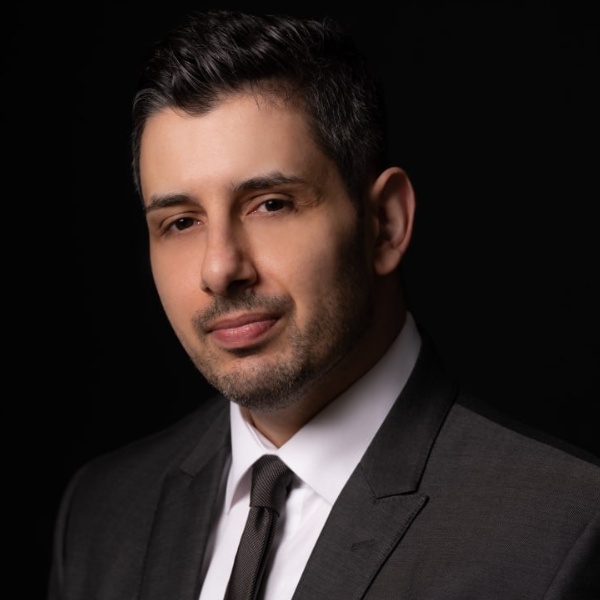
Kelly, a former trader on CNBC’s Fast Money, shut down his cryptocurrency fund in early 2025. That operation ran 24/7, with about eight employees in offices from Hong Kong to California — many of them based in New York pre-pandemic — and he was paying millions of dollars a year in salaries, health care and computing costs.
His AI use began in earnest around November 2025, when a new version of Anthropic’s Claude was launched.
At first he simply pasted charts into it and asked for a technical read. But by the time he opened Bracket22, he had rebuilt the roles his old employees filled as a set of AI agents instead. He estimated the arrangement has made him “at least 10 times more productive.”
His agents include Houston, Desmond, Steffi and Doocy
Kelly introduced CNBC to several of the agents. The appropriately named Houston is mission control, performing all research and coordination of the other bots. The aptly named Steffi (Graph) handles technical analysis, reading charts and price patterns. Desmond works on the quantitative side, and Doocy runs what Kelly called his red team.
Once the research is done, Doocy’s job is to “attack this entire thesis” and look for flaws. The roster runs longer than the four with speaking parts: Sy, Zephyr and Slater.
“I’ve crafted each of these agents to be a specialist in their field,” Kelly said, adding that he didn’t want one system making every decision. So, the agents produce the research, and he uses it to test himself. The final call on every trade is still Kelly’s.
JPMorgan and Goldman Sachs are testing the same idea
CNBC presented the one-man firm as an example of a shift the bigger banks are approaching more cautiously. JPMorgan Chase CEO Jamie Dimon told investors at the bank’s February 23 investor update that the bank already had “huge redeployment plans” for staff displaced by AI. Its headcount barely moved over the year, holding at 318,512, but operations roles shrank 4% while client-facing roles grew by the same share.
Not everyone inside the banking industry is comfortable, though. Chris Churchman, a Goldman Sachs partner who leads the firm’s Marquee platform, warned on Goldman’s Exchanges podcast, in remarks CNBC published Aug. 24, that bankers who hand their analysis to the models risk ”cognitive atrophy” and lose the ability to work a problem through from scratch. Much of what makes a good banker was never written down, he said, and juniors absorb it by doing the work themselves.
Kelly said people he’s talked to at big hedge funds are already running their own versions of an agent setup. The point isn’t necessarily to replace everyone with agents, he said. Give a company of 100 people the same tools, and you end up with ”a staff of a thousand.”
What this means for your job and your money
The roles Kelly replaced with AI involve reading charts, testing various trading strategies and the tedium of watching markets through the night. If your own job looks like that, the U.S. Bureau of Labor Statistics still projects employment for financial and investment analysts will grow 5.7% between 2024 and 2034, slower than personal financial advisors at 9.6%.
Meanwhile, the profile hasn’t yet revealed whether any of it makes Kelly money. The entire cost figures are his own estimates, and there are no outside clients to vouch for the results. So if any AI-run fund or trading app ever pitches you, seek verification on what it has returned, and for how long. Notable investors like Jeffrey Gundlach are telling people to keep their AI stock holdings near zero, and others are building defensive positions against the tech weighting already baked into index funds.
Kelly’s own picture of Wall Street’s future is a single fund manager with a couple of colleagues and a fleet of bots beneath them — not far from how Ray Dalio started Bridgewater out of his apartment. What he still brings, Kelly said, is creativity, which the agents haven’t managed yet. He doesn’t treat them as a substitute for people, at least not for now — and if that ever changes, “old BK will just have to be at the beach.”
Godwin Oluponmile is a content specialist, SEO strategist and copywriter with seven years of expertise in finance, Web 3.0, B2B SaaS and technology. His work has been featured in publications such as Entrepreneur, HackerNoon, Blocktelegraph and Benzinga.