• Discounts and special offers
  • Subscriber-only articles and interviews
  • Breaking news and trending topics

Already a subscriber?

By signing up, you accept Moneywise's Terms of Use, Subscription Agreement, and Privacy Policy.

Not interested ?

Top Stories
Washington DC, USA - September 15, 2020: President Donald Trump participates in the signing ceremony of the Abraham Accords noamgalai / Shutterstock

Trump Has Signed the Stimulus Checks Bill — so When Do You Get Your Cash?

While we adhere to strict editorial guidelines, partners on this page may provide us earnings.

After days of resistance, President Donald Trump has signed a $900 billion COVID aid package — which gives most Americans a second direct infusion of cash from the federal government.

Unlike the first round of "stimulus checks" that started going out last spring, this one will provide $600 per person. That's half as much as last time.

Advertisement

Trump thought the new amount was too skimpy, and he held back on signing the bill for days.

"I simply want to get our great people $2000, rather than the measly $600 that is now in the bill," the president tweeted Saturday morning.

But as the legislation went unsigned, special unemployment benefits for millions of Americans expired, and the U.S. faced the threat of a government shutdown.

Now that the new relief has become law, what happens next — especially as the president continues to push for $2,000 payments?

Trump isn't giving up on $2,000 checks

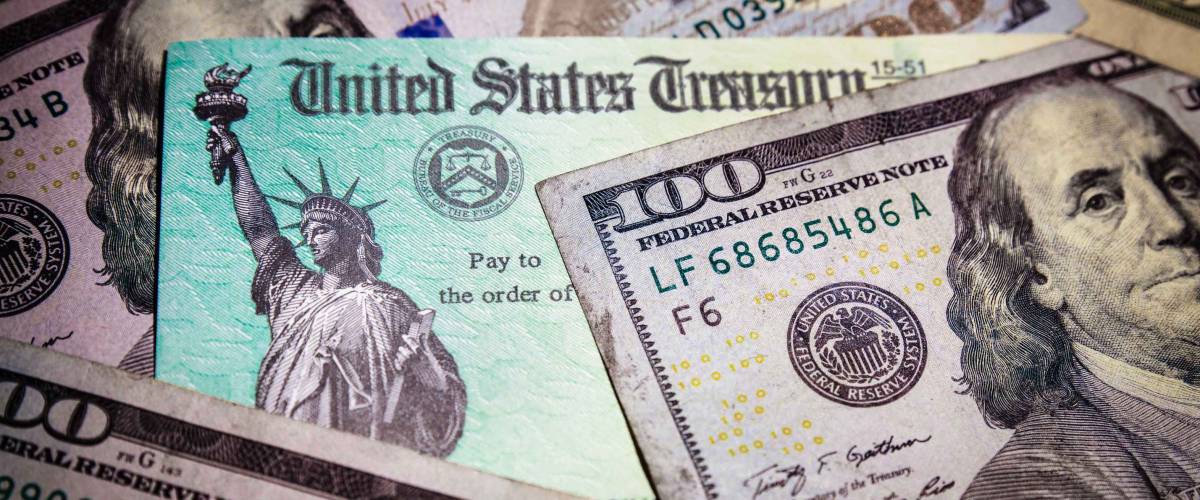
WASHINGTON DC - APRIL 2, 2020: United States Treasury check with US currency. Illustrates coronavirus stimulus payment
Jason Raff / Shutterstock

The new aid package includes not only the fresh payments to help struggling U.S. households and stimulate the weak economy, but also money for ailing businesses and $300 a week in bonus unemployment benefits. Plus, it will bring back the pandemic jobless benefits that lapsed early on Sunday.

In a statement, Trump said he put his signature on the document to provide urgently needed funding. But he still wants the stimulus checks increased.

"Unless Republicans have a death wish, and it is also the right thing to do, they must approve the $2000 payments ASAP. $600 IS NOT ENOUGH!" he tweeted on Tuesday.

Advertisement

The U.S. House, which is led by Democrats, approved the higher checks on a 275-134 vote Monday afternoon. But in the Republican-controlled Senate, an attempt to quickly approve $2,000 direct payments was blocked by Majority Leader Mitch McConnell on Tuesday.

Americans dealing with the pandemic have been eager for more government cash. They largely used the first batch to cover basic expenses including groceries and utility bills, a survey from the U.S. Bureau of Labor Statistics found.

Some also invested the money, the survey said, or used it for various other things. Those may have included buying affordable life insurance— sales of life insurance policies have surged this year in the shadow of the pandemic.

Must Read

Join 250,000+ readers and get Moneywise’s best stories and exclusive interviews first — clear insights curated and delivered weekly. Subscribe now.

When will you see some cash?

Serious couple with little girl counting budget at home
Iakov Filimonov / Shutterstock

Treasury Secretary Steve Mnuchin told CNBC last week that payments would be distributed "very, very fast" once the bill was signed, with some recipients getting their money via direct deposit within a week. That would mean shortly after New Year's.

For now, you should expect $600. What if you're straining to make ends meet and agree with the president that $600 is "measly"? Here are a few ideas to pull more money together on your own.

  • Find easy ways to cut your spending. Drop any subscription services you're not using. Do more of your own cooking and stop ordering carryout so much. And download a free browser add-on that will save you money every time you shop online, by instantly checking for better prices.

  • Slash the cost of your debt. If you’ve been leaning on your credit cards during the coronavirus crisis, you’re probably piling on a lot of interest. Tame your credit card debt — and make it go away more quickly — by rolling your balances into a single debt consolidation loan at lower interest.

  • Stop paying so much for insurance. As Americans have cut back on their driving this year, many car insurance companies have lowered their rates. If your insurer won’t cut you a break, it’s time to shop around for a better option. You also might save hundreds by comparing rates to get a better deal on your home insurance.

  • Trade in your mortgage for a cheaper one. Mortgage rates are at record lows, and refinancing your existing loan could provide huge savings. Mortgage tech and data provider Black Knight says 19.4 million U.S. homeowners could cut their monthly house payments by an average $308 per month through a refi.

You May Also Like

Share this:
Doug Whiteman Former Editor-in-Chief

Doug Whiteman was formerly the editor-in-chief of MoneyWise. He has been quoted by The Wall Street Journal, USA Today and CNBC.com and has been interviewed on Fox Business, CBS Radio and the syndicated TV show "First Business."

more from Doug Whiteman

Explore the latest

Disclaimer

The content provided on Moneywise is information to help users become financially literate. It is neither investment, tax nor legal advice, is not intended to be relied upon as a forecast, research or investment advice, and is not a recommendation, offer or solicitation to buy or sell any securities, enter into any loan, mortgage or insurance agreements or to adopt any investment strategy. Tax, investment and all other decisions should be made, as appropriate, only with guidance from a qualified professional. We make no representation or warranty of any kind, either express or implied, with respect to the data provided, the timeliness thereof, the results to be obtained by the use thereof or any other matter. Advertisers are not responsible for the content of this site, including any editorials or reviews that may appear on this site. For complete and current information on any advertiser product, please visit their website.

†Terms and Conditions apply.