• Discounts and special offers
  • Subscriber-only articles and interviews
  • Breaking news and trending topics

Already a subscriber?

By signing up, you accept Moneywise's Terms of Use, Subscription Agreement, and Privacy Policy.

Not interested ?

Investing Basics
Person holds box of vegetables grown on farm criene / Twenty20

ESG Investing: Why Progress and Profits Aren’t Mutually Exclusive

While this article is sponsored, we apply strict editorial guidelines to all of our content.

We’re confronted every day with the choice between making money and making a difference.

When it comes to investing, though, it’s not a choice you have to make.

Advertisement

The rise of socially conscious investing, also known as ESG (environmental, social and governance) investing, has created, and will continue to create, opportunities for investors to put their money where their morals are.

By investing with companies such as FarmTogether, you can have a hand in reversing the effects of some of the planet’s most alarming crises, from food shortages to climate destruction. By pouring money into such outfits, the hope is that their ESG goals will not only be accomplished, but adopted by other companies and corporations.

An obvious question is: “What about the returns?”

Let’s just say that ESG investing wouldn’t be the force it is today if people weren’t already making a whole lot of money off of it.

The state of ESG investing, circa now

Green plant growing from jar of coins, environmental investing
Micheile / Unsplash

More than $51 billion worth of capital made its way into sustainable investment funds in the U.S. in 2020. That’s more than double the amount invested in 2019, and a tenfold increase over 2018, according to data from financial services firm Morningstar.

Those investments have been paying off, too. In the first year of the COVID-19 pandemic, multiple investment funds with ESG leanings outperformed the market.

Advertisement

After analyzing 26 ESG ETFs and mutual funds with more than $250 million in assets under management, S&P Global Market Intelligence found that in the 12 months ending March 5, 2021, 19 of the funds outpaced the S&P 500, posting gains of between 27% and 55%.

Those that underperformed the S&P, which grew by 271% over the same 12-month period, still managed to generate returns of between roughly 18% and 26%. In a 2021 letter to his fellow CEOs, none other than Blackrock head Larry Fink touted the disruptive potential of ESG investing.

"As more and more investors choose to tilt their investments towards sustainability-focused companies, the tectonic shift we are seeing will accelerate further,” Fink wrote. “And because this will have such a dramatic impact on how capital is allocated, every management team and board will need to consider how this will impact their company's stock."

Solid returns and boundless upside should check two critical boxes for investors. But if you’re new to the concept of ESG investing, you’re probably wondering where putting your money will do the most good — for the planet and your portfolio.

Sponsored

Stabilize your portfolio by investing in farmland

Farmland is one of the top asset classes capable of insulating your money from volatile market conditions. Learn how you can use FarmTogether to safeguard your portfolio.

Diversify now

FarmTogether: The ESG investor’s new best friend

Red apples growing on tree
vinnikava / Twenty20

When it comes to deciding which companies are a fit for your ESG investor dollars, you want to be on the lookout for outfits that have already displayed a talent for turning a responsible business model into solid returns. One company successfully flying the flag for ESG is farmland investment platform FarmTogether. “Long-term food security and sustainability are core to our mission. It’s really the ‘why’ for FarmTogether,” says company COO David Chan.

In order to continue feeding the growing global population amidst increasingly scarce natural resources, Chan explains, farmers are turning toward sustainable, “carbon-smart” farming practices. Most, however, lack the capital and financing these transitions require, presenting a threat to both food security and environmental integrity.

Advertisement

“FarmTogether was founded to channel this capital to drive agriculture toward sustainability on a massive scale, while opening a vital asset class to all investors,” he says.

In addition to driving impact — sustainable agricultural practices often result in more productive, more valuable land — FarmTogether’s approach is also driving income.

“Farmland investments have had stronger risk-adjusted returns than stocks, bonds, real estate and gold,” Chan says. “By implementing climate-smart practices, farmers can reduce costs and increase their bottom line, meaning better returns for themselves and our investors.”

ESG in action

Farming, sustainable development
Globetrotter / Twenty20

Sustainability is baked into each step of FarmTogether’s business model, from choosing the operators the company leases its properties to to the nitty-gritty decisions that make each of its farms profitable.

“We work with our operators to implement micro-drip irrigation technology and climate-smart farming methods, such as cover cropping, minimizing tillage, and crop rotations, to make farms more efficient,” Chan says. “When applicable, we work with farmers to transition properties to organic operations, including our current offering, Daybreak Pear & Apple Orchard."

Advertisement

FarmTogether also partners with leading organizations, like Leading Harvest and Indigo Ag, to accelerate and scale innovations across the company’s offerings.

In January, FarmTogether enrolled its entire portfolio in NGO Leading Harvest’s Sustainable Farmland Management program. Leading Harvest's outcomes-based program can be applied across each crop and geography in FarmTogether’s portfolio, Chan says, “and covers everything from soil health, energy use, and water management to reduce the impacts of climate change.”

Grow your money for real by investing in farmland

Farmland is one of the top asset classes capable of insulating your money from volatile market conditions. Learn how you can use FarmTogether to further diversify your portfolio.

Learn more

How FarmTogether works

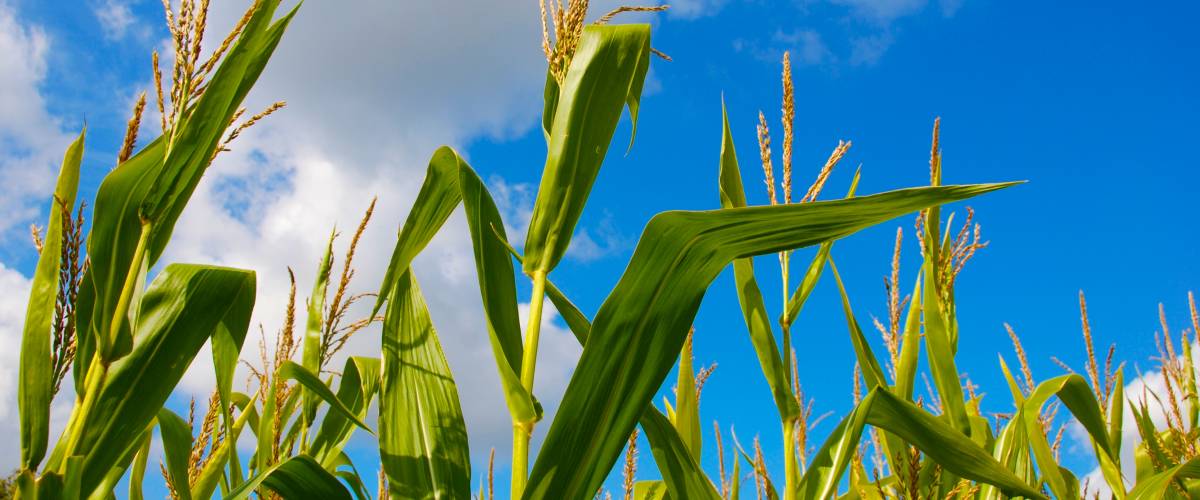
Corn growing on stalks against blue sky
andy_1285 / Twenty20

For many investors, farmland remains a somewhat mysterious asset class. Being unfamiliar with farmland makes evaluating agricultural assets challenging, and the combination of high cost barriers and the lack of a trusted marketplace prevents farmland from making its way into most portfolios.

FarmTogether has removed those obstacles.

The company’s investment team takes on the responsibility of evaluating a steady stream of both on- and off-market farmland opportunities across the U.S. Only when a property meets FarmTogether’s rigid standards and has been deemed a profitable, sustainable play, is it presented to FarmTogether members through the company’s online platform, where they can get exposure to multiple U.S. farming operations, and create a diversified farmland portfolio, with a few taps of a cell phone screen.

So if you’re a qualified investor — a minimum investment of $15,000 is required — with a desire to put your money to work for the greater good, get yourself a free FarmTogether account and decide what kind of difference you want to make.

Sponsored

Diversify your investments with farmland

You don't have to own a farm to profit off farmland.

Farmland has proven to be one of the most stable assets of the past few decades — and with FarmTogether, you're able to invest today. FarmTogether's platform gives accredited investors access to this exciting market, and one of the highest-yielding asset classes on a risk-return basis.

Sign up for FarmTogether to start investing in farmland.

Share this:

Clayton Jarvis is a mortgage reporter at MoneyWise. Prior to joining the MoneyWise team, Clay wrote for and edited a variety of real estate publications, including Canadian Real Estate Wealth, Real Estate Professional, Mortgage Broker News, Canadian Mortgage Professional, and Mortgage Professional America.

more from Clayton Jarvis

Explore the latest

Disclaimer

The content provided on Moneywise is information to help users become financially literate. It is neither investment, tax nor legal advice, is not intended to be relied upon as a forecast, research or investment advice, and is not a recommendation, offer or solicitation to buy or sell any securities, enter into any loan, mortgage or insurance agreements or to adopt any investment strategy. Tax, investment and all other decisions should be made, as appropriate, only with guidance from a qualified professional. We make no representation or warranty of any kind, either express or implied, with respect to the data provided, the timeliness thereof, the results to be obtained by the use thereof or any other matter. Advertisers are not responsible for the content of this site, including any editorials or reviews that may appear on this site. For complete and current information on any advertiser product, please visit their website.

†Terms and Conditions apply.