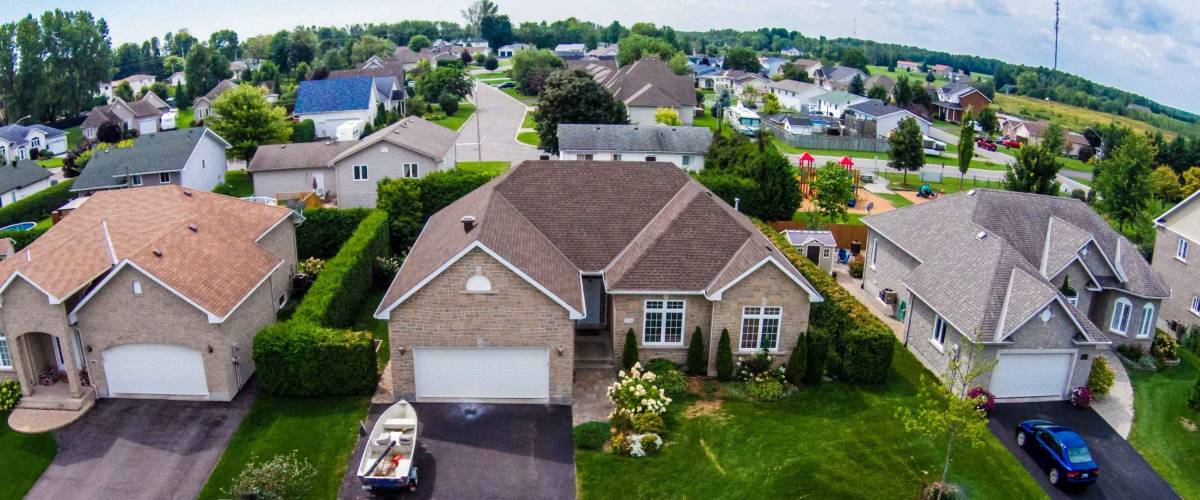
One of the more borrower-friendly mortgage options is available for a wider range of homebuyers in 2021 — so you might qualify even if you need a loan for more than $800,000.
Now, don't get the wrong idea: FHA loans are still primarily intended for low-to-moderate income borrowers and are still considered a good choice for a first-time buyer.
But the Federal Housing Administration, which backs these low-down-payment mortgages, has raised its loan limits for this year to reflect today's incredibly low mortgage rates and the sizzling housing market they've helped cook up.
Thanks for subscribing!
Stay ahead of the mortgage market, free.
By signing up, you accept Moneywise Terms of Use, Subscription Agreement, and Privacy Policy.
What's the deal with FHA loans?
Congress established the Federal Housing Administration in 1934, in the aftermath of the Great Depression, to help provide mortgages for borrowers who'd otherwise have trouble qualifying.
And that's still the mission of the FHA loan program today.
Though you might need a credit score of 620 to land the typical mortgage, you can be approved for an FHA loan with a score of just 500. And if you don't have much cash for a down payment, that's no problem because you can get an FHA loan by putting as little as 3.5% down.
The loans are issued by private lenders but are insured by the FHA, which steps in if a borrower stops making payments. That means less risk for the lenders and allows them to accept lower credit scores and down payments — and offer competitive mortgage rates.
At least one major lender, United Wholesale Mortgage, has been offering FHA loans with rates as low as 1.999%.
Must Read
- Jeff Bezos backs a platform that lets anyone invest in rental homes for as little as $100 — 6 ways to build wealth like a landlord without actually being one
- The tax breaks in Trump's 'big beautiful bill' expire after 2028. Here are 4 moves to make before the window closes
What are the new FHA loan limits?
The FHA's guarantee to lenders only goes so far: There are limits on FHA loans. And, the agency says on its website that it raised its ceilings by 7.4% at the start of 2021, partly due to "robust increases in median housing prices" across the U.S.
In late December, the median list price nationwide was up a stunning 13.3% from a year earlier, says Realtor.com, with record-low mortgage rates helping to stoke demand for houses and push up prices.
Here's how the FHA loan limits have increased:
| New limit (2021) | Old limit (2020) | |
|---|---|---|
| In most U.S. counties | $356,362 | $331,760 |
| Throughout Alaska, Hawaii, Guam, and the U.S. Virgin Islands | $1,233,550 | $1,148,400 |
| In high-cost counties elsewhere | $822,375 | $765,600 |
Why are the FHA loan limits for Alaska, Hawaii, Guam and the Virgin Islands so high? Well, because of high construction costs in the remote states and territories. It's expensive to get building materials to those places.
Is an FHA loan right for you?
Though FHA loans have lots of perks, there's a potentially expensive downside. To provide additional protection for lenders beyond the FHA's own guarantee, borrowers must pay the agency's mortgage insurance premiums, or MIPs.
There's a one-time upfront premium equal to 1.75% of the purchase price of your home, followed by annual insurance that's paid in monthly installments and ranges from 0.45% to 1.05%, though 0.85% is common.
The premiums never go away if you put down less than 10% when you take out your mortgage. If you make a down payment greater than 10%, you can shake your MIPs (yes, that does sound like a disease) after 11 years.
If you weigh the pros and cons and decide an FHA loan is the right choice for you, gather mortgage offers from at least five lenders and compare them — to find the best rate available to you.
Use those same comparison shopping skills when you buy your homeowners insurance. Review rate quotes from multiple insurance companies, to score the lowest rate on your coverage.
You May Also Like
- Dave Ramsey warns nearly 50% of Americans are making 1 big Social Security mistake — here’s what it is and 3 simple steps to fix it ASAP
- A single line on your car insurance policy could be inflating your premium by up to 30% — here's what to change
Doug Whiteman was formerly the editor-in-chief of MoneyWise. He has been quoted by The Wall Street Journal, USA Today and CNBC.com and has been interviewed on Fox Business, CBS Radio and the syndicated TV show "First Business."
Mortgages • Apr 17
What is a home equity line of credit (HELOC)?
Mortgages • Mar 19