5 moves to make once you’ve saved $50,000


Mar 17, 2026
While we adhere to strict editorial guidelines, partners on this page may provide us earnings.
Saving $50,000 is a serious financial milestone.
In fact, Federal Reserve data shows that fewer than half of U.S. households could cover three months of expenses from savings alone, which means reaching this level already puts you ahead of many Americans.
But here’s the catch: $50,000 is big enough to matter — and small enough to mismanage.
It’s substantial enough to generate meaningful returns. Significant enough to create real flexibility in your life. Yet it’s still vulnerable to: inflation, lifestyle creep, scattered investments or simple inaction.
Here are five ways to protect and properly put that first $50,000 to work.



Scale your investments with automation
At $50,000, your role isn’t to celebrate the milestone — it’s to compound.
Imagine two investors. The first intends to invest $1,000 each month but waits for a calmer market, a better headline or a bigger paycheck. Some months they skip. Some months they forget. By year-end, they’ve invested $3,500 instead of the full $6,000.
The second investor removes the decision entirely. They have $500 move automatically on the first of every month. No debate, no delay.
Assume a 7% annual return. That $2,500 annual gap, repeated for 20 years, isn’t just $50,000 in missed contributions. It’s over $100,000 when you factor in compounding. The cost isn’t volatility — it’s uninvested time.
Automation closes that gap. And with platforms like Acorns, that’s made incredibly easy.
In addition to allowing automatic recurring investments into diversified portfolios of low-cost index funds, the app also rounds up your everyday purchases to the nearest dollar and automatically invests the spare change.
Buy a coffee for $3.40, and 60 cents gets invested. It sounds small, and that’s the point. Small amounts — deployed consistently — compound quietly over time.
With Acorns, you can invest in an S&P 500 ETF with as little as $5 — and, if you sign up today, Acorns will add a $20 bonus to help you begin your investment journey.
Diversify into private real estate portfolios
As your portfolio grows, it’s less about chasing every market move and more about building resilience.
Public markets move fast. Headlines break around the clock, and when trading opens at 9:30 a.m., prices can swing instantly. Private real estate, by contrast, lives on a different timeline. An apartment building’s value isn’t repriced every second — it’s shaped by lease agreements, rental demand, renovations, and long-term neighborhood growth.
When stocks pull back sharply, a portfolio made up entirely of public equities can feel fragile. Adding private real estate can introduce stability through tangible, income-producing properties.
The Fundrise Flagship Fund¹ is a $1 billion private real estate fund that lets you invest in an expertly crafted strategy without needing hundreds of thousands of dollars.
You don’t need to be an accredited investor, and you can get started with as little as $10.
Industrial

215 Interchange
Las Vegas, NV
Build-for-rent

Pine Ridge
Fountain Inn, SC
Build-for-rent

Omnia
Richmond Hill, GAThese are a few examples of properties powering the Fundrise Flagship Fund. For a full list of the Fundrise Flagship Fund's portfolio properties see the Flagship Fund website.
With 4,700+ single-family homes and 2,500+ residential units owned by the Fundrise Flagship Fund, you get exposure to institutional-style scale and diversification.
After you place your first investment, the Fundrise Flagship Fund will work to find and add new assets to your portfolio over time and send you transparent updates along the way.
It only takes a few minutes to sign up now and become a real estate investor today.
By allocating part of your $50,000 milestone into this asset class, you’re positioning it to work harder and potentially compound over the long term.
Build a rental empire with fractional shares
If broad private real estate funds offer diversification, fractional ownership offers precision.
With $50,000, you can move beyond simply allocating to "real estate" and start deciding which properties you want exposure to — and where.
Real estate investment platform mogul, for instance, offers fractional ownership in blue-chip rental properties, which gives investors monthly rental income, real-time appreciation and tax benefits without the need for a $250,000 down payment or having to deal with 3 A.M. tenant calls.
Founded by former Goldman Sachs real estate investors, the team hand-picks the top 1% of single-family rental homes nationwide for you. Simply put, you can invest in institutional quality offerings for a fraction of the usual cost.
Across the board, the platform features an average annual IRR of 18.8%. Their cash-on-cash yields, meanwhile, average between 10-12% annually. Each property undergoes a vetting process, requiring a minimum 12% return even in downside scenarios. With numbers like that, it's no wonder that offerings sell out in under three hours — with investments typically ranging between $15,000 and $40,000 per property.

Access the blue-chip art market
Fine art trades on cultural significance, scarcity and global collector demand. That’s probably why it consistently shows up in billionaire portfolios, but it’s often overlooked by everyday investors.
Historically, access to this market required extraordinary wealth. A portrait by Gustav Klimt recently sold for $108.4 million, setting a record for one of the most expensive modern artworks ever auctioned.
Today, Masterworks has democratized access to art by allowing individuals to purchase fractional shares of multimillion-dollar paintings by blue-chip artists such as Pablo Picasso, Jean-Michel Basquiat, Claude Monet and Banksy.
Sold

Joan Mitchell
17.8% annualized net return
Sold

Yayoi Kusama
17.6% annualized net return
Sold

George Condo
21.5% annualized net returnThese are a few examples of sold artworks from Masterworks. For a full list of currently available art, visit Masterworks' Price Database.
How it works
Step 1: Accredited investors need to visit Masterworks.com, where they’ll be prompted to enter a few details about their portfolio and investment goals.
Step 2: Investors can schedule a call with one of Masterworks Advisers — registered investment representatives — to determine which current art holdings match their investment goals. The benefit is that you can select one or many art pieces, buying fractional shares based on your interests and goals.
Step 3: As soon as Masterworks sells a piece you invested in, you get a return from the net proceeds.
Masterworks has sold 25 artworks so far, yielding net annualized returns like 14.6%, 17.6%, and 17.8%.*
Allocating a portion of your $50,000 to blue-chip art can broaden your portfolio, giving you exposure to a market that behaves differently from stocks or real estate. Plus, as a Moneywise reader you can get priority access and skip the waitlist with this link.

*Past performance is not indicative of future returns. Investing involves risk. See important Regulation A disclosures at Masterworks.com/cd.
Plan for long-term growth
Once you’ve saved $50,000, managing your money starts to get more nuanced.
A fiduciary advisor can be particularly valuable at this stage because they are legally obligated to act in your best interest, not their own.
That means getting personalized guidance on how to diversify, manage risk, and align your investments with your long-term goals, without being upsold on products that don’t fit your situation.
Platforms like Advisor.com makes it easy to find this expertise.
Just answer a few quick questions through their online form and the platform will match you with a vetted financial advisor in 5 minutes.
You can set up a free, no-obligation-to-hire call to see how they can help you create an actionable plan and whether their approach and pricing model make sense for you.
One common strategy advisors often recommend is adding a small allocation of gold to your portfolio.
Gold can serve as a hedge against inflation, providing a layer of stability when stocks or bonds fluctuate.
Many experts suggest holding roughly 5 to 10% of your portfolio in gold, either through ETFs, bullion, or other vehicles, as part of a diversified strategy.
One way to invest in gold while enjoying tax advantages is to open a gold IRA with Priority Gold.
If you’d like to convert an existing IRA into a gold IRA, Priority Gold offers 100% free rollover, as well as free shipping and free storage for up to five years. Qualifying purchases will also receive up to $10,000 in free silver.
To learn more about how Priority Gold can help you reduce inflation’s impact on your nest egg, download their free 2026 gold investor bundle.
By combining professional guidance with thoughtful allocations, like a portion in gold, you can help ensure your savings continue to grow while being better prepared for market swings and inflation over time.
More money moves to make

Arrived
Real estate investing
Longbridge
Reverse mortgages
Freedom Debt Relief
Debt relief program- 1 Carefully consider the investment objectives, risks, charges and expenses of the Fundrise Flagship Fund before investing. This and other information can be found in the Fund’s prospectus. Read them carefully before investing. This marketing was vetted by the Moneywise team and sponsored by the Fundrise Flagship Fund.

Phil is a writer at Moneywise, bringing a strong background in public relations, financial communications, and copywriting. Educated in Cambridge, U.K., he has created content for several blue-chip companies, and his work has been featured on MSN, Yahoo, Google, and Apple News.
Explore the latest





















Explore the latest
-
Investing • 11h ago
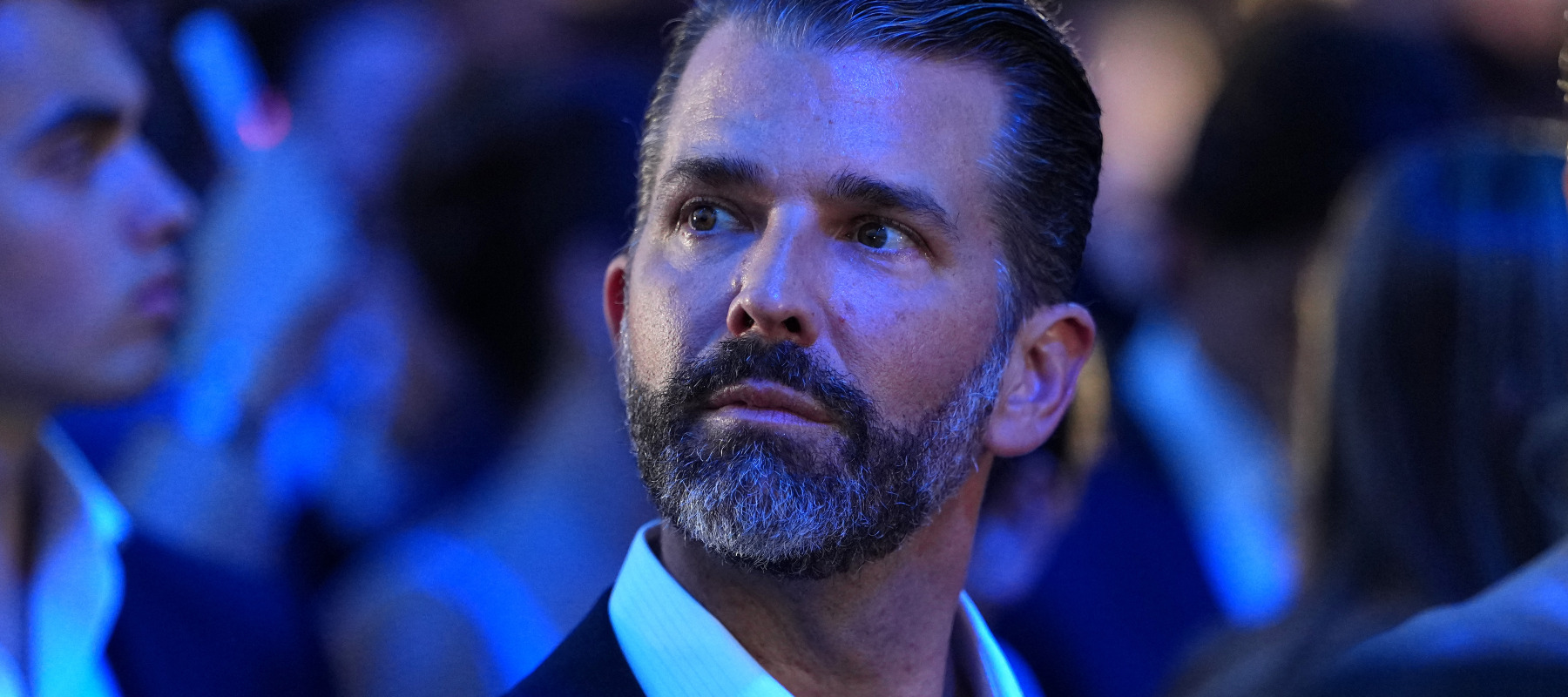
Trump Jr.’s Polymarket investment surges
News • 12h ago
Trump shifts $200B from universities to AI
News • 13h ago
Cramer slams US firms using Chinese AI
News • 14h ago
MLB bans AI-powered iPads from dugouts
-

News • 14h ago
Premier says ‘not a chance in hell’ he’ll let in US booze
News • 15h ago
Bloomberg blasts Trump's AI ownership plan
News • 16h ago
Blue-collar influencers recruit Gen Zers to work in trades
News • 16h ago
Hormuz danger pay signals rising costs
-

News • 17h ago
Soccer coach accused of $60K camp scam
Taxes • 17h ago
The IRS gets a cut of Spain's $50-million World Cup prize
Managing Money • 18h ago
The 7 top habits of ‘quietly wealthy’ Americans
Managing Money • 18h ago
She quit her office job for Yellowstone
Disclaimer
The content provided on Moneywise is information to help users become financially literate. It is neither investment, tax nor legal advice, is not intended to be relied upon as a forecast, research or investment advice, and is not a recommendation, offer or solicitation to buy or sell any securities, enter into any loan, mortgage or insurance agreements or to adopt any investment strategy. Tax, investment and all other decisions should be made, as appropriate, only with guidance from a qualified professional. We make no representation or warranty of any kind, either express or implied, with respect to the data provided, the timeliness thereof, the results to be obtained by the use thereof or any other matter. Advertisers are not responsible for the content of this site, including any editorials or reviews that may appear on this site. For complete and current information on any advertiser product, please visit their website.
†Terms and Conditions apply.